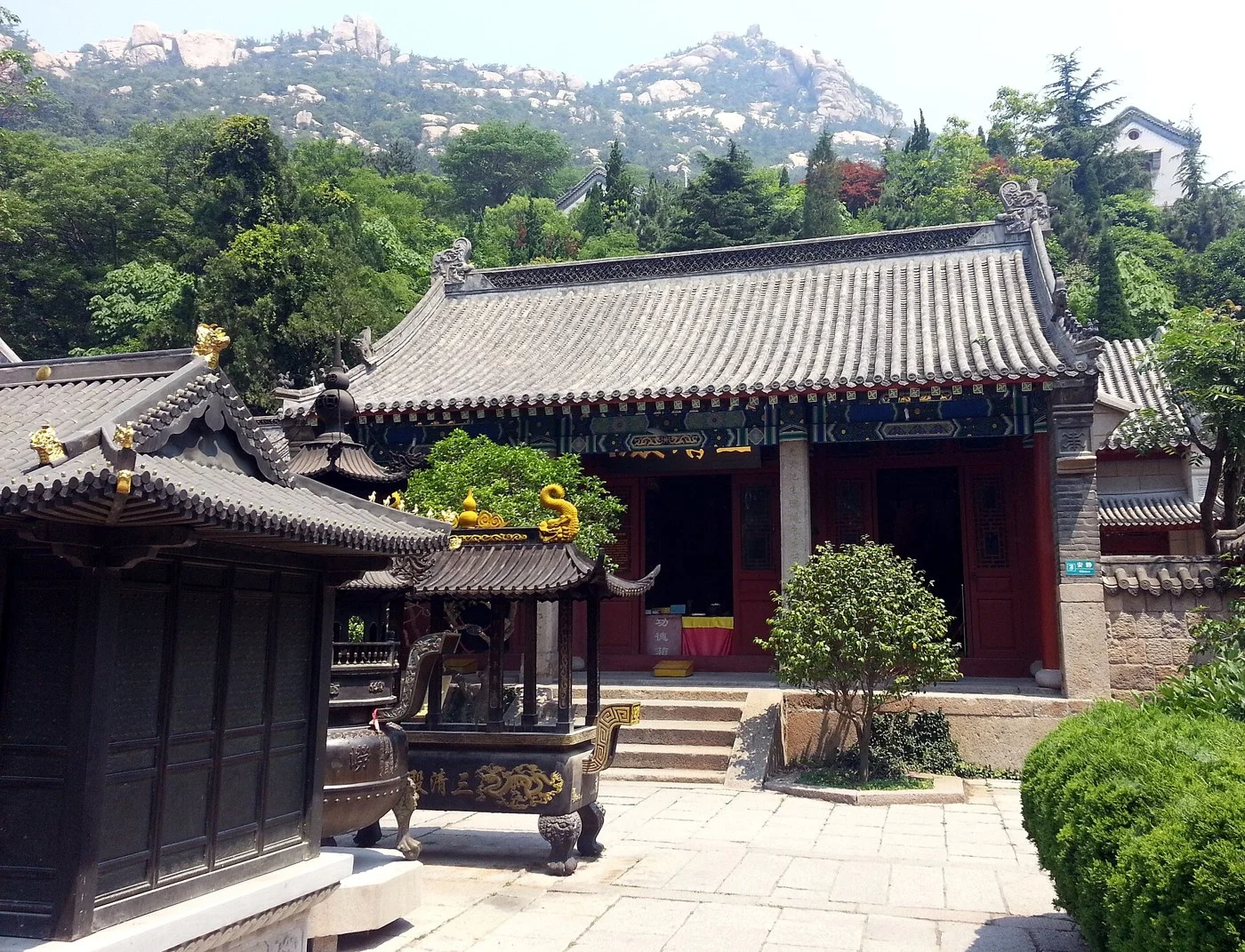
Mount Lao rises beside the coast at Qingdao. Its Daoist monasteries include Taiqing Palace, where buildings, old trees and inscriptions offer evidence of local religious culture. Halls and courtyards sit among slopes, trees and bays rather than apart from the landscape.
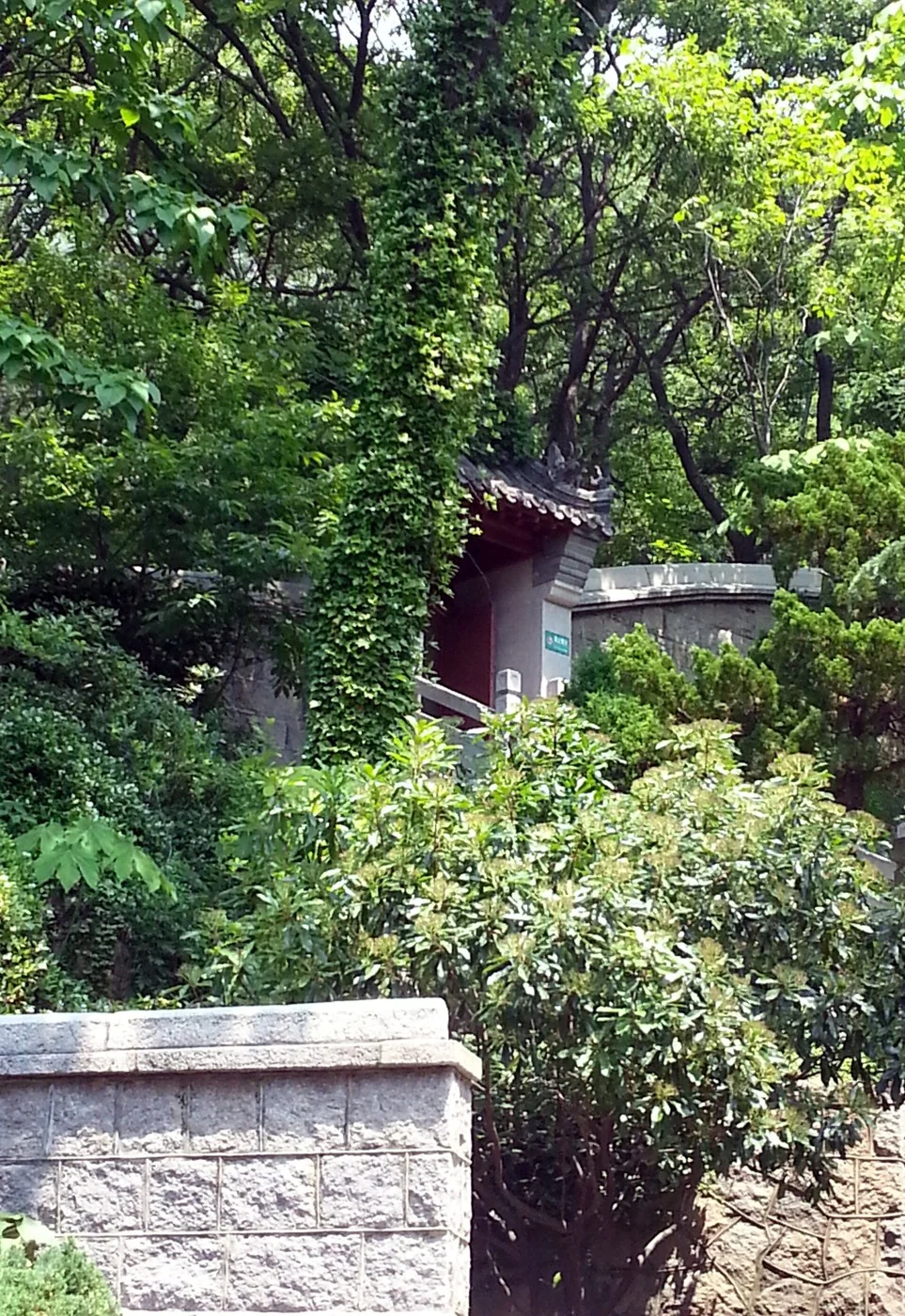
Photo: Rolfmueller · CC BY-SA 3.0 https://creativecommons.org/licenses/by-sa/3.0; resized and converted to WebP; derivative retains the original licence. Wikimedia Commons · original & licence ↗
Architecture and stories
Hall inscriptions, deities and stone texts can be read alongside literary stories about the mountain. Literary imagination and religious legend should be distinguished from historical evidence. Individual monasteries have their own histories; a story associated with one should not be applied to all. The main source linked here introduces Taiqing Palace, while this entry provides a broader mountain context.
Associated figures
Qiu Chuji, also called Changchunzi, was a leading Quanzhen figure. The scenic area’s account describes repeated visits to Mount Lao and poems left in inscriptions, connecting religious activity with landscape and literature.
Liu Chuxuan was another early Quanzhen figure and a disciple of Wang Chongyang. The same account records his arrival with Qiu Chuji to teach at Taiqing Palace and other places.
Different scenic areas can be far apart. Confirm entrances, transport and access arrangements separately.
Sources & further reading
English version prepared by Guanfu with AI assistance from the Chinese entry. This is an editorial adaptation, not a quotation from the source publishers. Third-party authorship and licence terms remain applicable; see the linked sources and individual image credits.
Please credit Guanfu and link to this page when citing this introduction. Retain the original author, source and licence for third-party material.