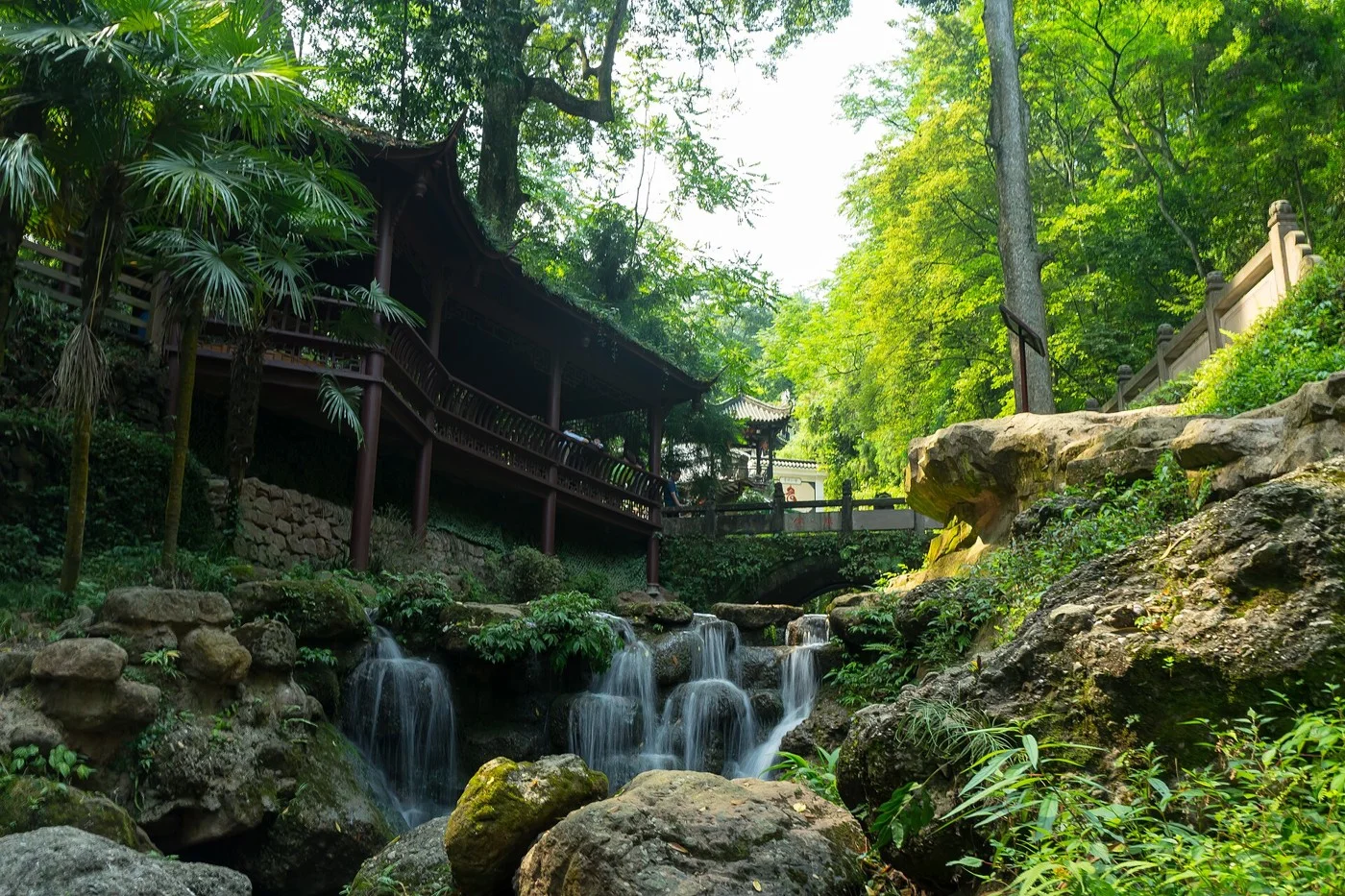
Mount Qingcheng is closely associated with traditions of Zhang Daoling’s teaching and the early history of Daoism. Together with the Dujiangyan irrigation system it entered the UNESCO World Heritage List in 2000. Temples, wooded paths and the mountain setting form a distinctive cultural landscape.
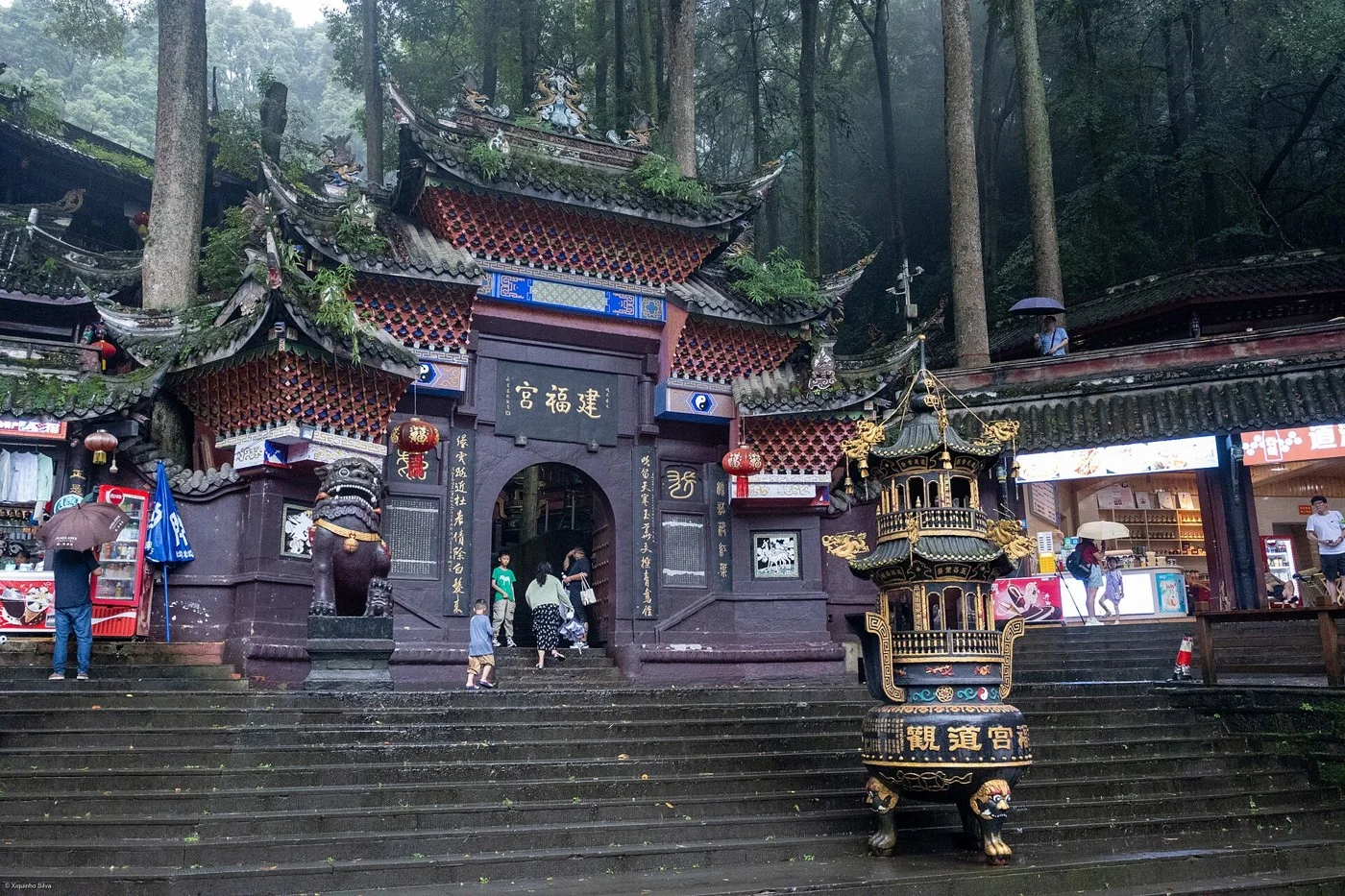
Photo: xiquinhosilva · CC BY 2.0 https://creativecommons.org/licenses/by/2.0; resized and converted to WebP; derivative retains the original licence. Wikimedia Commons · original & licence ↗
The front mountain and its temples
Jianfu Palace and Changdao Temple connect the memory of religious transmission with later building activity. The celebrated quietness of Qingcheng can be experienced through shaded paths, courtyards and the scale of its structures. Hall names and inscriptions help distinguish the functions of individual spaces.
Reading the landscape
The front mountain’s temple culture and the rear mountain’s nature routes have different emphases. Qingcheng and Dujiangyan share World Heritage status but express different values: a Daoist cultural landscape and a water-management system. Traditions about historical figures should be distinguished from building dates and documented heritage assessments.
Sources & further reading
English version prepared by Guanfu with AI assistance from the Chinese entry. This is an editorial adaptation, not a quotation from the source publishers. Third-party authorship and licence terms remain applicable; see the linked sources and individual image credits.
Please credit Guanfu and link to this page when citing this introduction. Retain the original author, source and licence for third-party material.