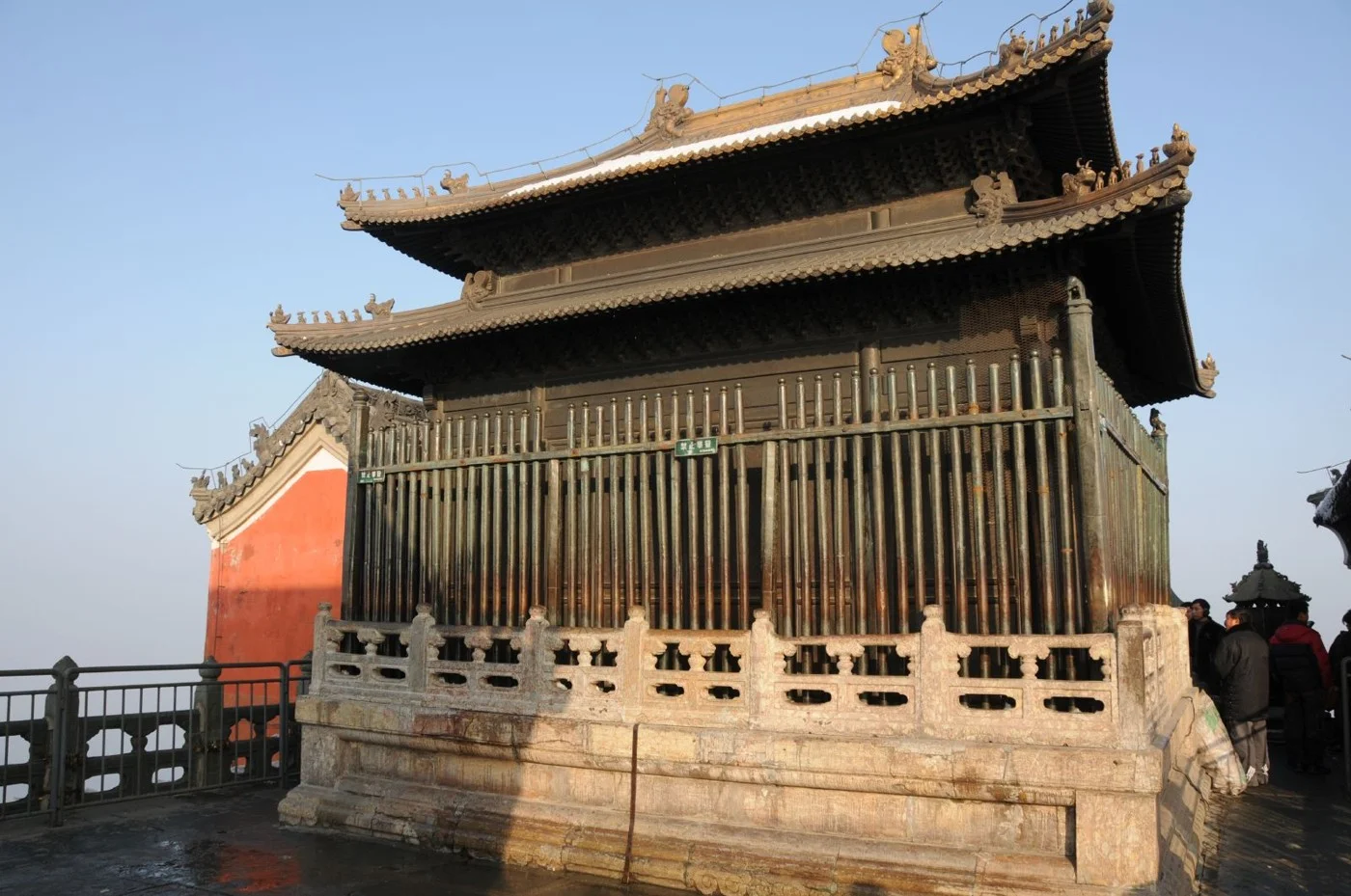
The Wudang Mountains are a major Daoist sacred landscape in Hubei. Temples follow valleys and slopes, forming a religious landscape shaped by the terrain. The Ancient Building Complex entered the UNESCO World Heritage List in 1994. Surviving structures reflect Yuan, Ming and Qing building traditions, with large-scale Ming construction especially important.
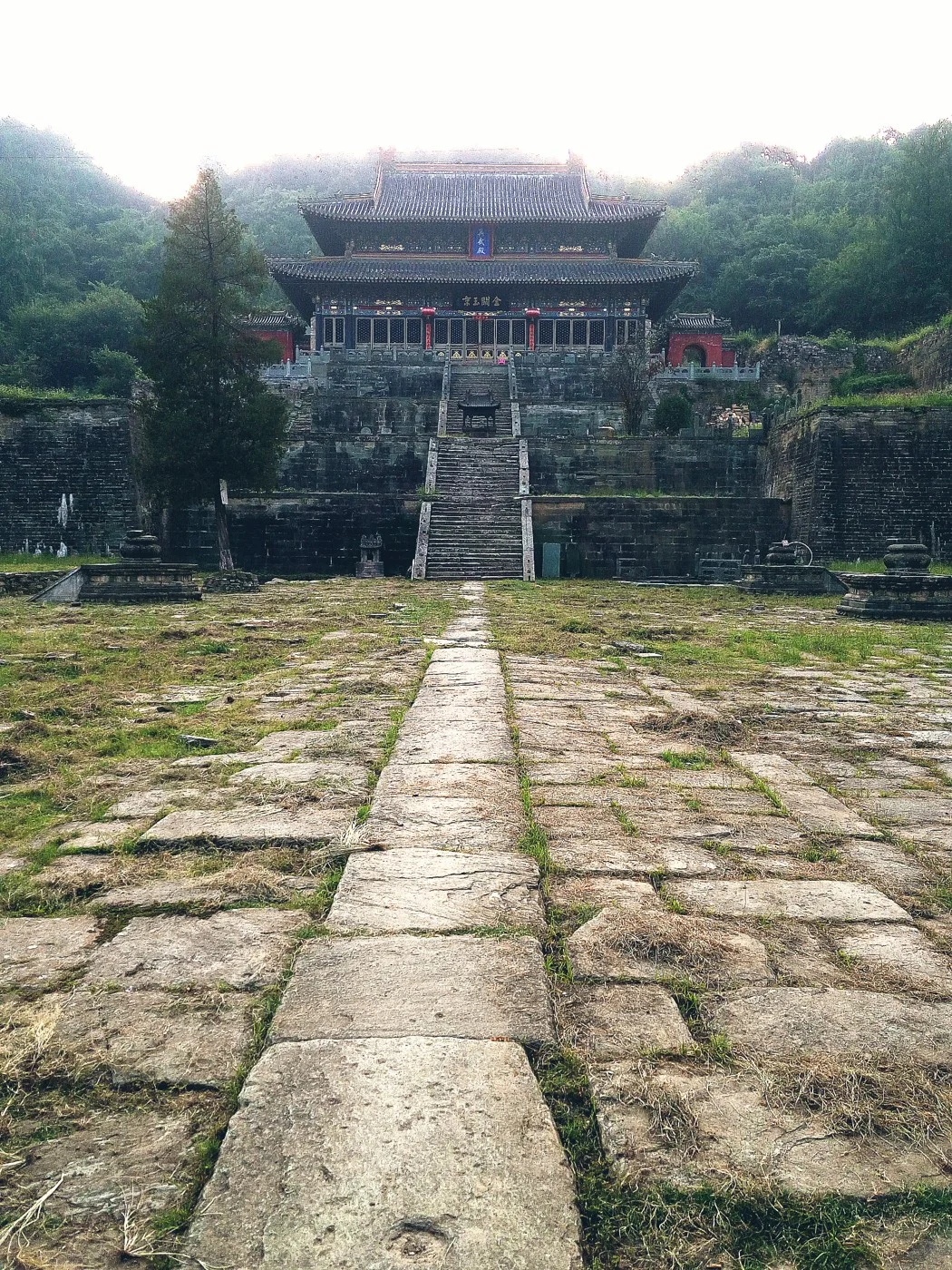
Photo: 折金扇 · CC BY 2.5 https://creativecommons.org/licenses/by/2.5; resized and converted to WebP; derivative retains the original licence. Wikimedia Commons · original & licence ↗
Mountains and temples
Compare the summit setting of the Golden Hall, the courtyards of Zixiao Palace and the cliff environment at Nanyan. Paths, steps and lines of sight connect buildings and contribute to the experience of pilgrimage. The separate Zixiao Palace entry offers a closer view of one part of the wider landscape.
Culture and reading
Wudang Daoism is closely connected with devotion to Zhenwu. Hall names, images and couplets offer clues to this tradition. Martial arts, health cultivation and religious observance have distinct histories and contexts and should not be treated as interchangeable. Living religious practice and conservation are both part of understanding the mountain.
Associated figure: Zhang Sanfeng
Zhang Sanfeng is a celebrated Daoist figure associated with Wudang. Historical accounts, religious reverence and later stories about his life and martial traditions overlap. Supernatural narratives should not be presented as established biography.
Sources & further reading
English version prepared by Guanfu with AI assistance from the Chinese entry. This is an editorial adaptation, not a quotation from the source publishers. Third-party authorship and licence terms remain applicable; see the linked sources and individual image credits.
Please credit Guanfu and link to this page when citing this introduction. Retain the original author, source and licence for third-party material.