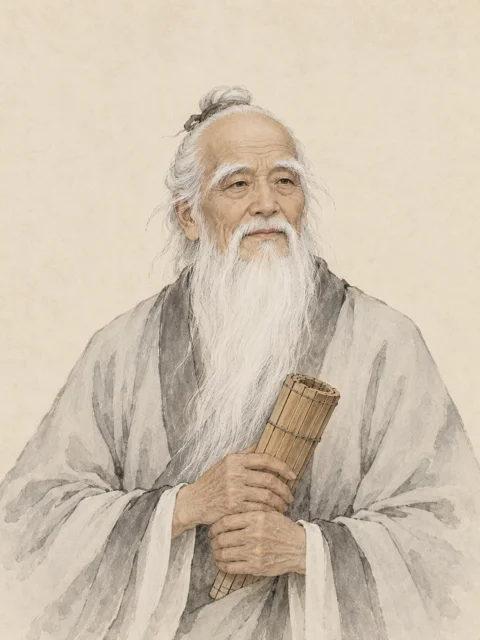
 AI 创作示意
GUANFU / en
道德经
AI 创作示意第二十二章
版本按章对照,不代表逐句校勘对应。
中文原文 / 原典;电子文本 Ching-yi Chen
观复随文注释 · 9 条
曲則全能屈曲退让反得保全,枉弯曲則直,窪則盈,敝則新,少則多,多則惑。是以聖人抱一守住根本的道為天下式天下的典范。不自見不自我炫示;见通现,故明﹔不自是不自以为是,故彰﹔不自伐不自夸功劳,故有功﹔不自矜不自高自大,故長。夫唯不爭,故天下莫能與之爭。古之所謂「曲則全」者,豈虛言哉!誠全而歸之真正得到保全而归于根本;有异解。
观复随文注释 · AI 辅助独立整理,待持续人工校订。释义以本章语境为依据;存在异说或底本疑讹的地方另作提示。原文及版本来源保留如下。
公有领域;Project Gutenberg 电子书使用条款随来源全文保留 · 查看原始版本
欢迎引用本站资源,分享道家与道教文化。引用时请注明出处“观复”,并附上所引用内容的原始页面链接,方便读者查阅。
观复白话释义(AI 辅助) / 观复 · AI 辅助独立整理
【白话释义|AI 辅助独立整理,未经人工学术审定】
委曲便能保全,屈曲便能伸直,低洼便能充盈,旧敝便能更新,少取便能有所得,贪多便会迷惑。因此圣人持守统一的根本,成为天下的范式。不自我炫示,所以明;不自以为是,所以彰显;不夸耀功劳,所以有功;不自高自大,所以能够长久居长。正因为不争,天下便没有谁能够与他争。古人所谓“委曲而得保全”,难道是空话吗?确实能够得到保全,并归于根本。
观复白话释义:AI 辅助依据古文独立编写,已进行文本覆盖核对,未经人工学术审定;原典来源及电子底本署名、许可见对应中文版本。 · 查看原始版本
James Legge 英译 / James Legge(理雅各)
1. The partial becomes complete; the crooked, straight; the empty, full; the worn out, new. He whose (desires) are few gets them; he whose (desires) are many goes astray.
2. Therefore the sage holds in his embrace the one thing (of humility), and manifests it to all the world. He is free from self-display, and therefore he shines; from self-assertion, and therefore he is distinguished; from self-boasting, and therefore his merit is acknowledged; from self-complacency, and therefore he acquires superiority. It is because he is thus free from striving that therefore no one in the world is able to strive with him.
3. That saying of the ancients that 'the partial becomes complete' was not vainly spoken:—all real completion is comprehended under it.
公有领域;Project Gutenberg 电子书使用条款随来源全文保留 · 查看原始版本
我的书签(此浏览器)
还没有书签。