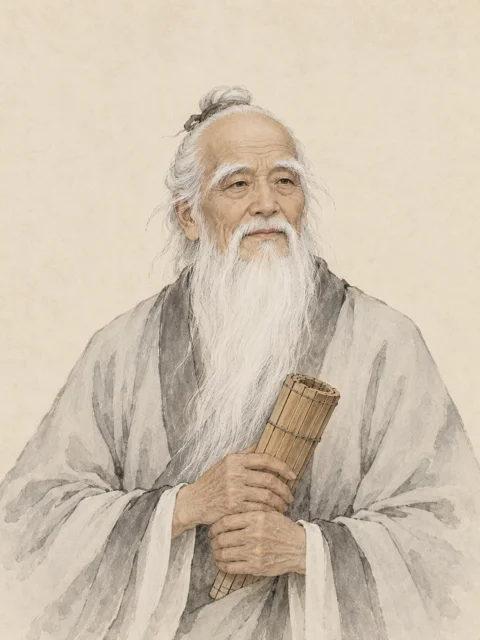
 AI 创作示意
GUANFU / en
道德经
AI 创作示意第三十九章
版本按章对照,不代表逐句校勘对应。
中文原文 / 原典;电子文本 Ching-yi Chen
观复随文注释 · 7 条
昔之得一获得统一的根本之道者:天得一以清﹔地得一以寧﹔神得一以靈﹔谷得一以盈﹔萬物得一以生﹔侯王得一以為天下正。其致之也,天無以清,將恐裂﹔地無以寧,將恐廢﹔神無以靈,將恐歇﹔谷無以盈,將恐竭﹔萬物無以生,將恐滅﹔侯王無以貞正固、安定,將恐蹶jué,颠仆、败落。故貴以賤為本,高以下為基。是以侯王自稱孤、寡、不穀古代君主的谦称;不谷,不善。此非以賤為本邪?非乎?故致譽無譽至高声誉不求声誉;本句有异文异解。是故不欲琭琭玉般光洁的样子;琭读 lù如玉,珞珞石般坚实的样子;珞读 luò如石。
观复随文注释 · AI 辅助独立整理,待持续人工校订。释义以本章语境为依据;存在异说或底本疑讹的地方另作提示。原文及版本来源保留如下。
公有领域;Project Gutenberg 电子书使用条款随来源全文保留 · 查看原始版本
欢迎引用本站资源,分享道家与道教文化。引用时请注明出处“观复”,并附上所引用内容的原始页面链接,方便读者查阅。
观复白话释义(AI 辅助) / 观复 · AI 辅助独立整理
【白话释义|AI 辅助独立整理,未经人工学术审定】
从前得到统一根本的:天因此清明,地因此安宁,神因此灵妙,山谷因此充盈,万物因此生长,侯王因此成为天下的准则。推究其反面:天失去清明的根本,恐会分裂;地失去安宁的根本,恐会崩坏;神失去灵妙的根本,恐会止息;谷失去充盈的根本,恐会枯竭;万物失去生长的根本,恐会灭绝;侯王失去端正的根本,恐会倾覆。所以尊贵以卑下为根本,高处以下面为基础。侯王自称孤、寡、不谷,不正是以卑下为根本吗?追求最高的声誉,反而不执著声誉。所以不愿像美玉那样炫目,也不把自己孤立成顽石般的姿态。〔校订:“致誉无誉”及玉、石末句有明显异文与训释分歧,末句暂作不炫异的解释,须重点校核。〕
观复白话释义:AI 辅助依据古文独立编写,已进行文本覆盖核对,未经人工学术审定;原典来源及电子底本署名、许可见对应中文版本。 · 查看原始版本
James Legge 英译 / James Legge(理雅各)
1. The things which from of old have got the One (the Tao) are—
Heaven which by it is bright and pure; Earth rendered thereby firm and sure; Spirits with powers by it supplied; Valleys kept full throughout their void All creatures which through it do live Princes and kings who from it get The model which to all they give.
All these are the results of the One (Tao).
2.
If heaven were not thus pure, it soon would rend; If earth were not thus sure, 'twould break and bend; Without these powers, the spirits soon would fail; If not so filled, the drought would parch each vale; Without that life, creatures would pass away; Princes and kings, without that moral sway, However grand and high, would all decay.
3. Thus it is that dignity finds its (firm) root in its (previous) meanness, and what is lofty finds its stability in the lowness (from which it rises). Hence princes and kings call themselves 'Orphans,' 'Men of small virtue,' and as 'Carriages without a nave.' Is not this an acknowledgment that in their considering themselves mean they see the foundation of their dignity? So it is that in the enumeration of the different parts of a carriage we do not come on what makes it answer the ends of a carriage. They do not wish to show themselves elegant-looking as jade, but (prefer) to be coarse-looking as an (ordinary) stone.
公有领域;Project Gutenberg 电子书使用条款随来源全文保留 · 查看原始版本
我的书签(此浏览器)
还没有书签。