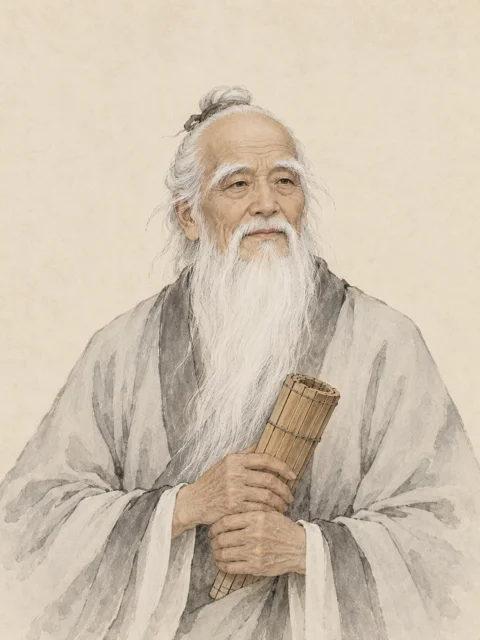
 AI 创作示意
GUANFU / zh-Hant
道德经
AI 创作示意第十四章
版本按章对照,不代表逐句校勘对应。
中文原文 / 原典;电子文本 Ching-yi Chen
观复随文注释 · 10 条
視之不見,名曰「夷无形无色,不能看见」﹔聽之不聞,名曰「希无声,不能听见」﹔搏用手摸取之不得,名曰「微」。此三者不可致詰追究、诘问到底,故混而為一。其上不皦jiǎo,明亮,其下不昧昏暗。繩繩绵延不绝而难分辨的样子不可名,復歸於無物。是謂無狀之狀,無物之象,是謂惚恍无定形、难以把握。迎之不見其首,隨之不見其後。執古之道,以御驾驭、把握今之有。能知古始,是謂道紀道的纲纪、端绪。
观复随文注释 · AI 辅助独立整理,待持续人工校订。释义以本章语境为依据;存在异说或底本疑讹的地方另作提示。原文及版本来源保留如下。
公有领域;Project Gutenberg 电子书使用条款随来源全文保留 · 查看原始版本
欢迎引用本站资源,分享道家与道教文化。引用时请注明出处“观复”,并附上所引用内容的原始页面链接,方便读者查阅。
观复白话释义(AI 辅助) / 观复 · AI 辅助独立整理
【白话释义|AI 辅助独立整理,未经人工学术审定】
看它看不见,叫作夷;听它听不到,叫作希;触取它取不到,叫作微。这三方面不能分别追究到底,所以浑合为一。它的上面不显得明亮,下面不显得昏暗;绵延不绝,无法用名字限定,复归于无具体形物的状态。这叫没有形状的形状、没有实物的形象,叫作恍惚。迎着它看不到开头,跟着它看不到末尾。把握自古以来的道,用来应对眼前存在的事物;能认识那古老的开端,就掌握了道的纲纪。
观复白话释义:AI 辅助依据古文独立编写,已进行文本覆盖核对,未经人工学术审定;原典来源及电子底本署名、许可见对应中文版本。 · 查看原始版本
James Legge 英译 / James Legge(理雅各)
1. We look at it, and we do not see it, and we name it 'the Equable.' We listen to it, and we do not hear it, and we name it 'the Inaudible.' We try to grasp it, and do not get hold of it, and we name it 'the Subtle.' With these three qualities, it cannot be made the subject of description; and hence we blend them together and obtain The One.
2. Its upper part is not bright, and its lower part is not obscure. Ceaseless in its action, it yet cannot be named, and then it again returns and becomes nothing. This is called the Form of the Formless, and the Semblance of the Invisible; this is called the Fleeting and Indeterminable.
3. We meet it and do not see its Front; we follow it, and do not see its Back. When we can lay hold of the Tao of old to direct the things of the present day, and are able to know it as it was of old in the beginning, this is called (unwinding) the clue of Tao.
公有领域;Project Gutenberg 电子书使用条款随来源全文保留 · 查看原始版本
我的书签(此浏览器)
还没有书签。