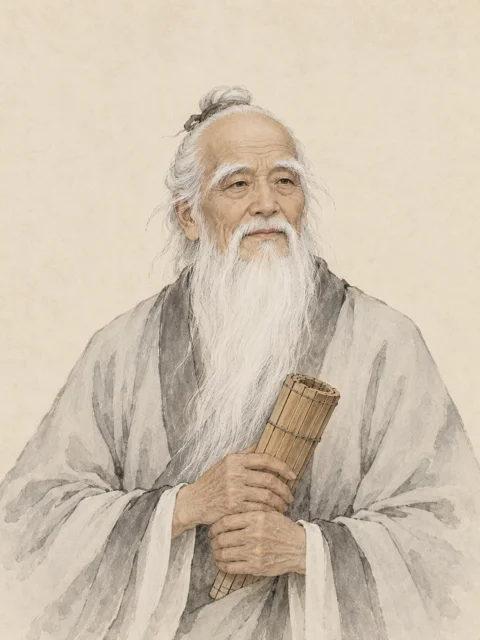
 AI 创作示意
GUANFU / zh-Hant
道德经
AI 创作示意第三十八章
版本按章对照,不代表逐句校勘对应。
中文原文 / 原典;电子文本 Ching-yi Chen
观复随文注释 · 7 条
上德不德德行高者不刻意表现有德,是以有德﹔下德不失德,是以無德。上德無為而無以為没有刻意的目的﹔下德無為而有以為。上仁為之而無以為﹔上義為之而有以為。上禮為之而莫之應,則攘臂捋袖伸臂而扔之拉扯、强迫对方服从;非现代扔弃。故失道而后德,失德而后仁,失仁而后義,失義而后禮。夫禮者,忠信之薄,而亂之首。前識预先揣测、以为先知者,道之華道的外在浮华,而愚之始。是以大丈夫處其厚安处于淳厚的根本,不居其薄﹔處其實,不居其華。故去彼取此。
观复随文注释 · AI 辅助独立整理,待持续人工校订。释义以本章语境为依据;存在异说或底本疑讹的地方另作提示。原文及版本来源保留如下。
公有领域;Project Gutenberg 电子书使用条款随来源全文保留 · 查看原始版本
欢迎引用本站资源,分享道家与道教文化。引用时请注明出处“观复”,并附上所引用内容的原始页面链接,方便读者查阅。
观复白话释义(AI 辅助) / 观复 · AI 辅助独立整理
【白话释义|AI 辅助独立整理,未经人工学术审定】
最高的德不把自己标榜为德,所以真正有德;较低的德紧抓着有德的名相,所以反而不具备真正的德。最高的德无为,也没有刻意的目的;较低的德即使表现得无为,心里仍有目的。最高的仁有所施为,却不求回报;最高的义有所施为,也有明确的目的。最高的礼有所施行,别人不回应,便挽起袖子强拉别人服从。所以失去道才强调德,失去德才强调仁,失去仁才强调义,失去义才强调礼。礼的外在形式,往往是忠信变得薄弱后的表现,也是纷乱的开端。自逞先见,是道的浮华,也是愚昧的起点。因此大丈夫立足厚实,不停留于浅薄;选择实质,不停留于浮华,舍彼取此。
观复白话释义:AI 辅助依据古文独立编写,已进行文本覆盖核对,未经人工学术审定;原典来源及电子底本署名、许可见对应中文版本。 · 查看原始版本
James Legge 英译 / James Legge(理雅各)
1. (Those who) possessed in highest degree the attributes (of the Tao) did not (seek) to show them, and therefore they possessed them (in fullest measure). (Those who) possessed in a lower degree those attributes (sought how) not to lose them, and therefore they did not possess them (in fullest measure).
2. (Those who) possessed in the highest degree those attributes did nothing (with a purpose), and had no need to do anything. (Those who) possessed them in a lower degree were (always) doing, and had need to be so doing.
3. (Those who) possessed the highest benevolence were (always seeking) to carry it out, and had no need to be doing so. (Those who) possessed the highest righteousness were (always seeking) to carry it out, and had need to be so doing.
4. (Those who) possessed the highest (sense of) propriety were (always seeking) to show it, and when men did not respond to it, they bared the arm and marched up to them.
5. Thus it was that when the Tao was lost, its attributes appeared; when its attributes were lost, benevolence appeared; when benevolence was lost, righteousness appeared; and when righteousness was lost, the proprieties appeared.
6. Now propriety is the attenuated form of leal-heartedness and good faith, and is also the commencement of disorder; swift apprehension is (only) a flower of the Tao, and is the beginning of stupidity.
7. Thus it is that the Great man abides by what is solid, and eschews what is flimsy; dwells with the fruit and not with the flower. It is thus that he puts away the one and makes choice of the other.
公有领域;Project Gutenberg 电子书使用条款随来源全文保留 · 查看原始版本
我的书签(此浏览器)
还没有书签。