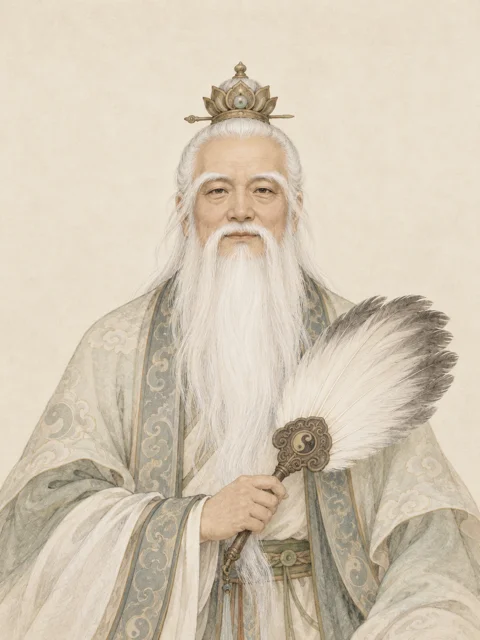
 AI 创作示意
GUANFU / zh-Hant
太上感应篇
AI 创作示意全文
版本按章对照,不代表逐句校勘对应。
中文原文 / 古籍原典;维基文库贡献者整理
观复随文注释 · 71 条
太上太上老君,道教尊神曰:「禍福無門祸福没有固定的入口,喻由行为招致,惟人自召;善惡之報,如影隨形。」
是以天地有司過之神宗教观念中记录人过错的神,依人所犯輕重,以奪人算减去寿算,属经文善恶报应观。算減則貧耗贫乏损耗,多逢憂患;人皆惡之,刑禍隨之,吉慶避之,惡星災之;算盡則死。
又有三台三台星君,古代星神信仰、北斗神君北斗星的神格,在人頭上,錄人罪惡,奪其紀算纪与算,宗教叙述中的寿命计数。又有三尸神道教认为寄在人身、告人过失的神,在人身中,每到庚申日干支纪日中的庚申,六十日一轮,輒总是、就上詣天曹上到天界官署;诣读 yì,言人罪過。月晦农历每月末日之日,竈神灶神,民间及道教的家宅神亦然。凡人有過,大則奪紀,小則奪算。其過大小,有數百事,欲求長生者,先須避之。
是道則進,非道則退。不履邪徑,不欺暗室无人看见时也不欺心;積德累功,慈心於物;忠孝友悌友爱兄弟、敬爱兄长;悌读 tì,正己化人;矜孤恤寡怜悯孤儿,救济寡居者,敬老懷幼关怀幼小;昆蟲草木,猶不可傷。宜憫人之凶,樂人之善;濟人之急,救人之危。見人之得,如己之得;見人之失,如己之失。不彰人短显扬别人的短处,不炫己長;遏惡揚善阻止恶行、表扬善行,推多取少。受辱不怨,受寵若驚。施恩不求報,與人不追悔。
所謂善人,人皆敬之,天道佑之,福祿隨之,眾邪遠之,神靈衛之;所作必成,神仙可冀可以希望成仙,属劝善信仰叙述。欲求天仙者,當立一千三百善;欲求地仙者,當立三百善。
苟或假如有人非義而動,背理而行。以惡為能,忍作殘害;陰賊暗中伤害良善,暗侮君親;慢其先生轻慢自己的老师,叛其所事;誑kuáng,欺骗諸無識,謗諸同學;虛誣詐偽,攻訐揭短攻击;讦读 jié宗親;剛強不仁,狠戾凶狠乖张;戾读 lì自用;是非不當,向背乖宜赞同反对不合道理;虐下取功,諂上希旨谄媚上司、迎合其意;受恩不感,念怨不休;輕蔑天民,擾亂國政;賞及非義,刑及無辜;殺人取財,傾人取位;誅降戮服杀害已经投降服从的人,貶正排賢;凌孤逼寡,棄法受賂;以直為曲,以曲為直;入輕為重把轻罪判作重罪,見殺加怒;知過不改,知善不為;自罪引他,壅塞方術阻塞有益的技艺或方法;訕謗聖賢,侵凌道德。
射飛逐走,發蟄驚棲惊扰蛰伏、栖息的动物;填穴覆巢,傷胎破卵;願人有失,毀人成功;危人自安,減人自益;以惡易好,以私廢公,竊人之能,蔽人之善;形人之醜显露别人的丑事,訐人之私;耗人貨財,離人骨肉;侵人所愛,助人為非;逞志作威,辱人求勝;敗人苗稼,破人婚姻;苟富而驕,苟免無恥;認恩推過把恩德归己、过错推人,嫁禍賣惡;沽買虛譽用手段买取空名,包貯險心;挫人所長,護己所短;乘威迫脅,縱暴殺傷;無故剪裁无正当用途而剪损物品,非禮烹宰不合礼制地宰杀动物;散棄五穀,勞擾眾生;破人之家,取其財寶;決水放火,以害民居;紊亂規模,以敗人功;損人器物,以窮人用。
見他榮貴,願他流貶被流放、贬谪;見他富有,願他破散;見他色美,起心私之;負他貨財欠别人的财物,願他身死;干求有所求取不遂,便生咒恨;見他失便,便說他過;見他體相不具身体形貌有缺损而笑之,見他才能可稱而抑之。
埋蠱厭人以埋蛊厌胜诅咒人,古代巫术观念,用藥殺樹;恚怒怨恨发怒;恚读 huì師傅,抵觸父兄;強取強求,好侵好奪;擄掠致富,巧詐求遷用诈术求升迁;賞罰不平,逸樂過節享乐超过限度;苛虐其下,恐嚇於他;怨天尤人,呵風罵雨;鬪合爭訟挑唆他人争斗诉讼,妄逐朋黨;用妻妾語,違父母訓;得新忘故,口是心非;貪冒於財,欺罔其上;造作惡語,讒毀平人无辜的人;毀人稱直,罵神稱正;棄順效逆,背親向疏;指天地以證鄙懷卑劣的私心,引神明而鑒猥事卑陋不正之事。
施與後悔,假借不還;分外營求,力上施設超过自身能力勉强行事;淫慾過度,心毒貌慈;穢食餧人用污秽食物给人吃;餧同喂,左道被经文斥为邪僻的术法惑眾;短尺狹度,輕秤小升用不足量的秤斗克扣;以偽雜真,採取姦利;壓良為賤把良民强迫变作奴婢,謾驀欺骗、冒犯;驀读 mò愚人;貪婪無厭,咒詛求直以诅咒求证明自己有理。
嗜酒悖亂,骨肉忿爭;男不忠良,女不柔順;不和其室,不敬其夫;每好矜誇,常行妒忌;無行於妻子妻与子女,失禮於舅姑古时妻子称公婆;輕慢先靈,違逆上命;作為無益,懷挾外心;自咒咒他,偏憎偏愛;越井越竈,跳食跳人;損子墮胎,行多隱僻;晦臘月末与岁末祭祀之日歌舞,朔旦农历初一早晨號怒;對北涕唾及溺,對竈吟詠及哭;又以竈火燒香,穢柴作食;夜起裸露,八節二分二至与四立等节令行刑;唾流星,指虹霓;輒指三光日、月、星,久視日月;春月燎獵烧草木驱兽打猎,對北惡罵,無故殺龜打蛇…如是等罪,司命隨其輕重,奪其紀算。算盡則死;死有餘責未抵尽的罪责,属报应说,乃殃及子孫。
又諸橫取不义地强取人財者,乃計其妻子、家口以當之,漸至死喪。若不死喪,則有水火盜賊、遺亡器物、疾病口舌争讼、口角諸事,以當妄取之值。
又枉殺人者,是易刀兵而相殺也。取非義之財者,譬如漏脯被屋漏水污染的干肉,古人视为有毒救飢,鴆酒传说中以鸩毒制成的毒酒止渴;非不暫飽,死亦及之。
夫心起於善,善雖未為,而吉神已隨之;或心起於惡,惡雖未為,而凶神已隨之。其有曾行惡事,後自改悔,諸惡莫作,眾善奉行,久久必獲吉慶;所謂轉禍為福也。故吉人行善的人語善、視善、行善,一日有三善,三年天必降之福。凶人語惡、視惡、行惡,一日有三惡,三年天必降之禍。胡不为什么不勉而行之?
观复随文注释 · AI 辅助独立整理,待持续人工校订。释义以本章语境为依据;存在异说或底本疑讹的地方另作提示。原文及版本来源保留如下。
原典公有领域;电子文本据维基文库贡献者,CC BY-SA 4.0(https://creativecommons.org/licenses/by-sa/4.0/);保留署名与相同方式共享,调整章节与排版。 · 查看原始版本
欢迎引用本站资源,分享道家与道教文化。引用时请注明出处“观复”,并附上所引用内容的原始页面链接,方便读者查阅。
观复白话释义(AI 辅助) / 观复 · AI 辅助独立整理
【白话释义|AI 辅助独立整理,未经人工学术审定】
太上说:祸与福没有固定的入口,都是人的行为自己招来的;善恶的报应,像影子跟随形体一样跟随人的作为。
因此,天地间有掌管过错的神灵,按照人所犯过错的轻重,扣减人的寿数。寿数被扣减,便会贫困耗损,多遇忧患;别人厌恶他,刑罚灾祸跟随他,吉庆远离他,凶星降灾给他。寿数耗尽,就会死亡。
又有三台、北斗神君,在人的头上记录罪恶,扣减寿纪寿算。还有三尸神住在人体内,每逢庚申日,就上达天曹,报告人的过错。每月最后一天,灶神也做同样的事。人有过错,大的扣减一纪,小的扣减一算。大小过错有几百种,想求长生的人,首先应当避开它们。
合乎道义的就前进,不合乎道义的就退止。不走邪路,即使在无人看见的暗室,也不欺骗。积累德行和善功,以慈爱之心对待万物。尽忠、尽孝,友爱兄弟、敬爱长辈,端正自己并感化他人。怜悯孤儿,体恤寡居者,尊敬老人,关怀幼小,连昆虫草木也不任意伤害。
应当怜悯别人的灾难,乐见别人的善行,接济别人的急难,救助别人的危险。看见别人有所得,如同自己有所得;看见别人有所损失,如同自己有所损失。不张扬别人的短处,不炫耀自己的长处。阻止恶事,表扬善行,把多的让给别人,自己取少的。受到屈辱而不怨恨,得到宠爱反而警惕。帮助别人不求回报,给了别人不事后懊悔。
这样的人,叫作善人。人们尊敬他,天道护佑他,福禄跟随他,邪恶远离他,神灵守护他;所做的事可以成就,成为神仙也可以期望。想求成为天仙,应当建立一千三百件善行;想求成为地仙,应当建立三百件善行。
反过来,如果为不义而行动,违背道理而行事,把作恶看作本领,忍心残害别人;暗害善良之人,私下侮慢君上与父母;怠慢老师,背叛自己所事奉的人;欺骗无知者,毁谤同学;捏造事实、欺诈虚伪,攻讦同宗亲族;强横不仁,凶狠乖戾、自行其是;判断是非不当,亲疏取舍失去应有的分寸;虐待下属来取得功劳,谄媚上司来迎合意旨;受恩不感激,怀怨不肯停止;轻视百姓,扰乱国家政事;奖赏不义的人,惩罚无辜的人;杀人夺财,倾陷他人以夺取职位;诛杀已经投降、服从的人,贬斥正直者、排挤贤能者;欺凌孤儿、逼迫寡妇,抛弃法律、收受贿赂;把正直说成邪曲,把邪曲说成正直;把轻罪判成重罪,看见处死别人还增添怒意;明知有错却不改,明知有善却不做;把自己的罪责牵连到别人身上,阻塞他人的技艺与谋生道路;讥讪毁谤圣贤,侵害有道德的人——这些都是过错。
还有:射杀飞鸟,追逐走兽,掘出蛰伏的虫兽,惊扰栖息的鸟;填塞洞穴,倾覆巢窝,伤害胎中生命,毁坏鸟卵;希望别人有所损失,破坏别人已经做成的事;使别人危险来换取自己的安全,减损别人的利益来增加自己的利益;拿坏东西调换好东西,以私利损害公事;窃取别人的才能成果,遮掩别人的善处;揭露别人的丑处,攻讦别人的私事;耗损别人的财物,离散别人的骨肉;侵夺别人珍爱的东西,帮助别人做坏事;任意逞威,羞辱别人以求胜过别人;毁坏别人的庄稼,破坏别人的婚姻;侥幸富有便骄傲,侥幸免罚却不知羞耻;把恩惠算在自己头上,把过错推给别人;转嫁祸患,出卖自己的恶行让别人承受;购买虚假的名声,暗藏险恶的心思;压抑别人的长处,袒护自己的短处;凭借权势逼迫威胁,放纵暴力杀伤;无故剪坏、浪费材料,不合礼制而烹杀牲畜;散弃粮食,劳累扰害众生;破坏别人的家庭,夺取财宝;决水放火,损害民居;打乱规制安排,以破坏别人的工作;损坏别人的器具,使别人无物可用。
看见别人荣耀显贵,希望他被放逐贬谪;看见别人富有,希望他家破财散;看见别人容貌美丽,就起占有的私心;欠着别人的钱物,却希望债主死去;求取不成,就生出诅咒怨恨;看见别人遭遇不顺,就说他的过错;看见别人身体形貌有缺损就嘲笑,看见别人有值得称赞的才能就压制。
埋藏蛊物、使用厌胜手段害人,用药物毒死树木;迁怒老师,顶撞父兄;强行索取,喜好侵占抢夺;靠掳掠致富,以巧诈谋升迁;赏罚不公平,享乐超过节度;苛虐下属,恐吓他人;怨天责人,呵斥风、咒骂雨;挑起斗争诉讼,胡乱追随朋党;听从妻妾的话而违背父母训诲;得到新的便忘掉旧的,嘴上认同、心里否定;贪占财物,蒙骗上级;编造恶言,谗毁无辜之人;毁谤别人却自称直率,辱骂神灵却自称正直;抛弃顺理的行为、模仿悖逆的行为,背离亲人、转向疏远者;指着天地为自己卑劣的心思作证,拉神明来见证猥鄙的事情。
给予之后又后悔,借用之后不归还;追求本分之外的非分所得,强做超过能力的事情;淫欲过度,内心狠毒而外貌慈和;把污秽食物给别人吃,用旁门邪说迷惑众人;用短尺、窄量具、轻秤、小升斗欺骗交易;在真货里掺假,获取不正当利益;把良民压为贱籍,欺骗冒犯愚昧的人;贪得无厌,靠诅咒赌誓证明自己有理。
嗜酒而行为悖乱,亲人之间愤怒争斗;男子不忠厚良善,女子不柔顺;不与妻子和睦,不敬重丈夫;经常自夸,常怀嫉妒;对妻儿没有应有的品行,对公婆失去礼敬;轻慢祖先神灵,违背上级命令;做无益的事情,暗怀别样的心思;诅咒自己或别人,偏爱偏憎;跨越水井、灶台,跳过食物或人的身体;伤害孩子、损伤胎孕,多做隐蔽邪僻的事;在月末、岁终祭日歌舞,在每月初一的早晨号叫发怒;向北方吐涕、吐唾或小便,对着灶吟咏哭泣;用灶火烧香,用污秽柴木做饭;夜间起身裸露身体,在八节行刑;朝流星吐唾,指点虹霓;随意指点日月星辰,长久直视日月;春天放火焚烧草木以围猎,朝北恶骂,无故杀龟打蛇。像这样的罪过,掌管寿命的神依其轻重扣减寿纪寿算;寿数耗尽就死去,死后仍有未偿的罪责,就会殃及子孙。
还有,横取别人财物的人,神明会把他的妻儿、家庭人口计算在内,作为相抵的代价,使家中渐渐发生死亡。即使没有死亡,也会发生水灾、火灾、盗窃、财物遗失、疾病、口舌争执等事情,用来抵偿非法取得的财物价值。
冤枉杀害别人的人,就像双方交换兵器再互相杀害。取得不义之财,就像用被屋漏污染的肉脯充饥、用毒酒止渴:并不是不能暂时满足饥渴,但死亡也会随后而来。
心里生起善念,即使善事还没有实行,吉神已经跟随;心里生起恶念,即使恶事还没有实行,凶神已经跟随。曾经做过恶事的人,后来自己改过悔悟,不再作恶,奉行众善,长久坚持,必能得到吉庆,这就是所谓转祸为福。所以吉善的人说善言、看善事、做善行,一天有这三善,三年后天必降福;凶恶的人说恶言、看恶事、做恶行,一天有这三恶,三年后天必降祸。为什么不努力去实行善呢?
【校订说明】本文按本站原文顺序逐项释义。神灵记过、扣减寿数、子孙受报等是原典的宗教报应叙述,不作为现实因果结论或对受难者的评判。“纪”“算”的具体长度在注说中不尽一致,此处不强定年数。文中性别、家庭等级、刑罚及方位时日禁忌保留其历史语义,不作为现代行为规范或医疗建议。“壅塞方术”“嫁祸卖恶”“漏脯”等词暂采用上述解释,待人工核校。
观复白话释义:AI 辅助依据古文独立编写,已进行文本覆盖核对,未经人工学术审定;原典来源及电子底本署名、许可见对应中文版本。 · 查看原始版本
James Legge 英译(正文) / James Legge(理雅各),1891
1. The Thâi-Shang (Tractate) says, 'There are no special doors for calamity and happiness (in men's lot); they come as men themselves call them. Their recompenses follow good and evil as the shadow follows the substance.
2. 'Accordingly, in heaven and earth there are spirits that take account of men's transgressions, and, according to the lightness or gravity of their offences, take away from their term of life. When that term is curtailed, men become poor and reduced, and meet with many sorrows and afflictions. All (other) men hate them; punishments and calamities attend them; good luck and occasions for felicitation shun them; evil stars send down misfortunes on them. When their term of life is exhausted they die.
'There also are the Spirit-rulers in the three pairs of the Thâi stars of the Northern Bushel over men's heads, which record their acts of guilt and wickedness, and take away (from their term of life) periods of twelve years or of a hundred days.
'There also are the three Spirits of the recumbent body which reside within a man's person. As each kang-shän day comes round, they forthwith ascend to the court of Heaven, and report men's deeds of guilt and transgression. On the last day of the moon, the spirit of the Hearth does the same.
'In the case of every man's transgressions, when they are great, twelve years are taken from his term of life; when they are small, a hundred days.
'Transgressions, great and small, are seen in several hundred things. He who wishes to seek for long life must first avoid these.
3. 'Is his way right, he should go forward in it; is it wrong, he should withdraw from it.
'He will not tread in devious by-ways; he will not impose on himself in any secret apartment. He will amass virtue and accumulate deeds of merit. He will feel kindly towards (all) creatures. He will be loyal, filial, loving to his younger brothers, and submissive to his elder. He will make himself correct and (so) transform others. He will pity orphans, and compassionate widows; he will respect the old and cherish the young. Even the insect tribes, grass, and trees he should not hurt.
'He ought to pity the malignant tendencies of others; to rejoice over their excellences; to help them in their straits; to rescue them from their perils; to regard their gains as if they were his own, and their losses in the same way; not to publish their shortcomings; not to vaunt his own superiorities; to put a stop to what is evil, and exalt and display what is good; to yield much, and take little for himself; to receive insult without resenting it, and honour with an appearance of apprehension; to bestow favours without seeking for a return, and give to others without any subsequent regret:--this is what is called a good man.
All other men respect him; Heaven in its course protects him; happiness and emolument follow him; all evil things keep far from him; the spiritual Intelligences defend him; what he does is sure to succeed he may hope to become Immaterial and Immortal.
He who would seek to become an Immortal of Heaven ought to give the proof of 1300 good deeds; and he who would seek to become an Immortal of Earth should give the proof of three hundred.
4. 'But if the movements (of a man's heart) are contrary to righteousness, and the (actions of his) conduct are in opposition to reason; if he regard his wickedness as a proof of his ability, and can bear to do what is cruel and injurious; if he secretly harms the honest and good; if he treats with. clandestine slight his ruler or parents; if he is disrespectful to his elders and teachers; if he disregards the authority of those whom he should serve; if he deceives the simple; if he calumniates his fellow-learners; if he vent baseless slanders, practise deception and hypocrisy, and attack and expose his kindred by consanguinity and affinity; if he is hard, violent, and without humanity; if he is ruthlessly cruel in taking his own way; if his judgments of right and wrong are incorrect; and his likings and aversions are in despite of what is proper; if he oppresses inferiors, and claims merit (for doing so); courts superiors by gratifying their (evil) desires; receives favours without feeling grateful for them; broods over resentments without ceasing; if he slights and makes no account of Heaven's people; if he trouble and throw into disorder the government of the state; bestows rewards on the unrighteous and inflicts punishments on the guiltless; kills men in order to get their wealth, and overthrows men to get their offices; slays those who have surrendered, and massacres those who have made their submission; throws censure on the upright, and overthrows the worthy; maltreats the orphan and oppresses the widow; if he casts the laws aside and receives bribes; holds the right to be wrong and the wrong to be right; enters light offences as heavy; and the sight of an execution makes him more enraged (with the criminal); if he knows his faults and does not change them, or knows what is good and does not do it; throws the guilt of his crimes on others; if he tries to hinder the exercise of an art (for a living); reviles and slanders the sage and worthy; and assails and oppresses (the principles of) reason and virtue; if he shoots birds and hunts beasts, unearths the burrowing insects and frightens roosting birds, blocks up the dens of animals and overturns nests, hurts the pregnant womb and breaks eggs; if he wishes others to have misfortunes and losses; and defames the merit achieved by others if he imperils others to secure his own safety; diminishes the property of others to increase his own; exchanges bad things for good; and sacrifices the public weal to his private advantage; if he takes credit to himself for the ability of others; conceals the excellences of others; publishes the things discreditable to others; and searches out the private affairs of others; leads others to waste their property and wealth; and causes the separation of near relatives; encroaches on what others love; and assists others in doing wrong; gives the reins to his will and puts on airs of majesty; puts others to shame in seeking victory for himself; injures or destroys the growing crops of others; and breaks up projected marriages; if becoming rich by improper means makes him proud; and by a peradventure escaping the consequences of his misconduct, he yet feels no shame; if he owns to favours (which he did not confer), and puts off his errors (on others); marries away (his own) calamity to another, and sells (for gain) his own wickedness; purchases for himself empty praise; and keeps hidden dangerous purposes in his heart; detracts from the excellences of others, and screens his own shortcomings if he takes advantage of his dignity to practise intimidation, and indulges his cruelty to kill and wound; if without cause he (wastes cloth) in clipping and shaping it; cooks animals for food, when no rites require it; scatters and throws away the five grains; and burdens and vexes all living creatures; if he ruins the families of others, and gets possession of their money and valuables; admits the water or raises fire in order to injure their dwellings; if he throws into confusion the established rules in order to defeat the services of others; and injures the implements of others to deprive them of the things they require to use; if, seeing others in glory and honour, he wishes them to be banished or degraded; or seeing them wealthy and prosperous, he wishes them to be broken and scattered; if he sees a beautiful woman and forms the thought of illicit intercourse with her; is indebted to men for goods or money, and wishes them to die; if, when his requests and applications are not complied with, his anger vents itself in imprecations; if he sees others meeting with misfortune, and begins to speak of their misdeeds; or seeing them with bodily imperfections he laughs at them; or when their abilities are worthy of praise, he endeavours to keep them back; if he buries the image of another to obtain an injurious power over him; or employs poison to kill trees; if he is indignant and angry with his instructors; or opposes and thwarts his father and elder brother; if he takes things by violence or vehemently demands them; if he loves secretly to pilfer, and openly to snatch; makes himself rich by plunder and rapine; or by artifice and deceit seeks for promotion; if he rewards and punishes unfairly; if he indulges in idleness and pleasure to excess; is exacting and oppressive to his inferiors; and tries to frighten other men; if he murmurs against Heaven and finds fault with men; reproaches the wind and reviles the rain; if he fights and joins in quarrels; strives and raises litigations; recklessly hurries to join associate fraternities; is led by the words of his wife or concubine to disobey the instructions of his parents; if, on getting what is new, he forgets the old; and agrees with his mouth, while he dissents in his heart; if he is covetous and greedy after wealth, and deceives and befools his superiors (to get it); if he invents wicked speeches to calumniate and overthrow the innocent; defames others and calls it being straightforward; reviles the Spirits and styles himself correct; if he casts aside what is according to right, and imitates what is against it; turns his back on his near relatives, and his face to those who are distant; if he appeals to Heaven and Earth to witness to the mean thoughts of his mind; or calls in the spiritual Intelligences to mark the filthy affairs of his life; if he gives and afterwards repents that he has done so; or borrows and does not return; if he plans and seeks for what is beyond his lot; or lays tasks (on people) beyond their strength; if he indulges his lustful desires without measure; if there be poison in his heart and mildness in his face; if he gives others filthy food to eat; or by corrupt doctrines deludes the multitude; if he uses a short cubit, a narrow measure, light weights, and a small pint; mixes spurious articles with the genuine; and (thus) amasses illicit gain; if he degrades (children or others of) decent condition to mean positions; or deceives and ensnares simple people; if he is insatiably covetous and greedy; tries by oaths and imprecations to prove himself correct; and in his liking for drink is rude and disorderly; if he quarrels angrily with his nearest relatives; and as a man he is not loyal and honourable; if a woman is not gentle and obedient; if (the husband) is not harmonious with his wife; if the wife does not reverence her husband; if he is always fond of boasting and bragging; if she is constantly jealous and envious; if he is guilty of improper conduct to his wife or sons; if she fails to behave properly to her parents-in-law; if he treats with slight and disrespect the spirits of his ancestors; if he opposes and rebels against the charge of his sovereign; if he occupies himself in doing what is of no use; and cherishes and keeps concealed a purpose other than what appears; if he utter imprecations against himself and against others (in the assertion of his innocence); or is partial in his likes and dislikes; if he strides over the well or the hearth; leaps over the food, or over a man; kills newly-born children or brings about abortions; if he does many actions of secret depravity; if he sings and dances on the last day of the moon or of the year; bawls out or gets angry on the first day of the moon or in the early dawn; weeps, spits, or urinates, when fronting the north sighs, sings, or wails, when fronting the fire-place and moreover, if he takes fire from the hearth to burn incense; or uses dirty firewood to cook with; if he rises at night and shows his person naked; if at the eight terms of the year he inflicts punishments; if he spits at a shooting star; points at a rainbow; suddenly points to the three luminaries; looks long at the sun and moon; in the months of spring burns the thickets in hunting; with his face to the north angrily reviles others; and without reason kills tortoises and smites snakes :--
'In the case of crimes such as these, (the Spirits) presiding over the Life, according to their lightness or gravity, take away the culprit's periods of twelve years or of one hundred days. When his term of life is exhausted, death ensues. If at death there remains guilt unpunished, judgment extends to his posterity.
5. 'Moreover, when parties by wrong and violence take the money of others, an account is taken, and set against its amount, of their wives and children, and all the members of their families, when these gradually die. If they do not die, there are the disasters from water, fire, thieves, and robbers, from losses of property, illnesses, and (evil) tongues to balance the value of their wicked appropriations. Further, those who wrongfully kill men are (only) putting their weapons into the hands of others who will in their turn kill them.
'To take to one's self unrighteous wealth is like satisfying one's hunger with putrid food, or one's thirst with poisoned wine. It gives a temporary relief, indeed, but death also follows it.
'Now when the thought of doing good has arisen in a man's mind, though the good be not yet done, the good Spirits are in attendance on him. Or, if the thought of doing evil has arisen, though the evil be not yet done, the bad Spirits are in attendance on him.
'If one have, indeed, done deeds of wickedness, but afterwards alters his way and repents, resolved not to do anything wicked, but to practise reverently all that is good, he is sure in the long-run to obtain good fortune:--this is called changing calamity into blessing. Therefore the good man speaks what is good, contemplates what is good, and does what is good; every day he has these three virtues:--at the end of three years Heaven is sure to send down blessing on him.
The bad man speaks what is wicked, contemplates what is wicked, and does what is wicked; every day he has these three vices:--at the end of three years, Heaven is sure to send down misery on him.--How is it that men will not exert themselves to do what is good?'
James Legge 1891 年历史英译,公有领域;据 Sacred Books of the East 第40卷。收录译文正文,省略页码、边题及脚注;注释见原始来源。 · 查看原始版本
我的书签(此浏览器)
还没有书签。