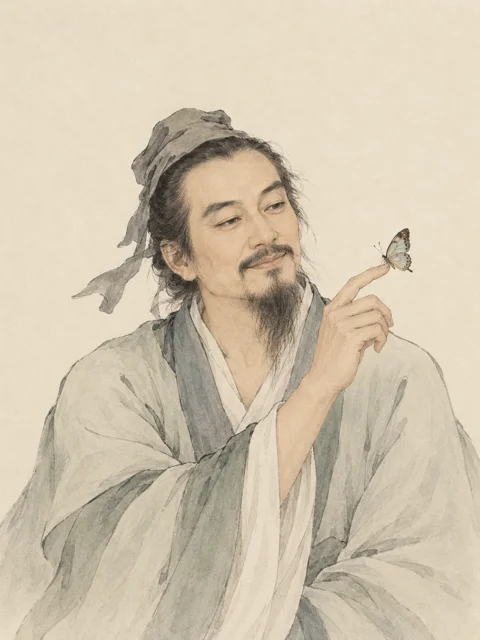
 AI 创作示意
GUANFU / zh-Hans
庄子
AI 创作示意杂篇 · 寓言 · 白话释义
版本按章对照,不代表逐句校勘对应。
中文原文(全三十三篇) / 庄子原典;维基文库贡献者整理
观复随文注释 · 37 条
寓言十九借他人故事立论,约占十分之九,重言十七借重长者权威的言说,约占十分之七,巵言随物变化、不固执一端的言说日出,和以天倪自然的分际。寓言十九,藉外論之借助外在人物、事情论说。親父不爲其子媒,親父譽之,不若非其父者也。非吾罪也,人之罪也。與己同則應,不與己同則反。同於己,爲是之;異於己,爲非之。重言十七,所以己一作「已」言也。是爲耆艾德高年长的人;耆读 qí,年先矣,而无經緯本末以期年耆者,是非先也。人而无以先人,无人道也。人而无人道,是之謂陳人年老而无见识、徒具陈迹的人。巵言日出,和以天倪,因以曼衍随顺无穷变化,所以窮年终尽天年。不言則齊,齊與言不齊。言與齊不齊也,故曰无言。言无言,終身言,未嘗不言;終身不言,未嘗不言。有自也而可,有自也而不可,有自也而然,有自也而不然。惡乎然?然於然。惡乎不然?不然於不然。惡乎可?可於可。惡乎不可?不可於不可。物固有所然,物固有所可,无物不然,无物不可。非巵言日出,和以天倪,孰得其久?萬物皆種也,以不同形相禪相互更替;禪读 shàn,始卒若環,莫得其倫,是謂天均天然的均衡。天均者,天倪也。
莊子謂惠子曰:「孔子行年六十而六十化,始時所是,卒而非之。未知今之所謂是之,非五十九非也?」惠子曰:「孔子勤志服知勤于用心,役使智识也。」莊子曰:「孔子謝之矣,而其未之嘗言。孔子云:『夫受才乎大本生命与万物的根本,復靈回复灵明的本性以生。鳴而當律,言而當法,利義陳乎前,而好惡是非,直服人之口而已矣。使人乃以心服,而不敢蘁违逆;读 wù,立定天下之定。』已乎已乎,吾且不得及彼乎!」
曾子再仕而心再化,曰:「吾及親仕,三釜少量的俸禄;釜为古量器而心樂。後仕,三千鍾丰厚俸禄;鍾为古量器,(而)不洎未能赶上,此指亲人已逝,吾心悲。」弟子問于仲尼曰:「若參者,可謂无所縣悬挂,喻内心有所系累其罪乎?」曰:「旣已縣矣,夫无所縣者,可以有哀乎?彼視三釜三千鍾,如鸛一作「觀」(雀)蚊(虻)相過乎前也。」
顏成子游謂東郭子綦曰:「自吾聞子之言,一年而野脱去文饰,回复自然,二年而從,三年而通,四年而物,五年而來,六年而鬼入神妙内入的境界,七年而天成,八年而不知死、不知生,九年而大妙极为精妙而无拘滞。」
生有爲,死也勸公归入自然公共的变化;古注有异说,以其死也有自也;而生,陽也,无自也。而果然乎?惡乎其所適,惡乎其所不適?天有歷數,地有人據,吾惡乎求之?莫知其所終,若之何其无命也?莫知其所始,若之何其有命也?有以相應也,若之何其无鬼邪?无以相應也,若之何其有鬼邪?
衆罔兩影子外围的淡影問於影曰:「若向也俯而今也仰,向也括束发而今也被髮,向也坐而今也起,向也行而今也止,何也?」影曰:「叟叟随动的样子;通搜搜也,奚稍問也?予有而不知其所以。予,蜩甲蝉蜕留下的壳也,蛇蛻也,似之而非也。火與日,吾屯我聚集显现;屯有聚义也。陰與夜,吾代我隐退消失也。彼,吾所以有待邪?而況乎以有待者乎?彼來則我與之來,彼往則我與之往,彼强陽自然而然地行动則我與之强陽。强陽者,又何以有問乎?」
陽子居南之沛,老耼西遊於秦。邀於郊,至於梁,而遇老子。老子中道仰天而歎曰:「始以汝爲可教,今不可也。」陽子居不荅一作「答」。至舍,進盥漱洗手漱口;盥读 guàn巾櫛毛巾与梳子,脫屨鞋;读 jù戶外,膝行而前,曰:「向者弟子欲請夫子,夫子行不閒,是以不敢。今閒矣,請問某一作「其」過?」老子曰:「而睢睢盱盱抬眼昂视、骄傲的样子,而誰與居?大白若辱极为洁白却仿佛污黑,不自炫耀,盛德若不足。」陽子居蹵然變容,曰:「敬聞命矣!」其往也,舍者迎將其家,公執席,妻執巾櫛,舍者避席,煬者烤火的人;煬读 yáng避竈;其反也,舍者與之爭席不再因威仪而敬避,表示亲近平等矣。
观复随文注释 · AI 辅助独立整理,待持续人工校订。释义以本章语境为依据;存在异说或底本疑讹的地方另作提示。原文及版本来源保留如下。
参考: 本站所收原典:杂篇 · 寓言 ↗
原典公有领域;电子文本据维基文库贡献者,按 CC BY-SA 4.0 保留署名及相同方式共享;调整空白与排版。 · 查看原始版本
欢迎引用本站资源,分享道家与道教文化。引用时请注明出处“观复”,并附上所引用内容的原始页面链接,方便读者查阅。
观复白话释义(AI 辅助) / 观复 · AI 辅助独立整理
【观复白话释义|AI 辅助·未经人工学术审定】
寄托在别人或别的事物上的寓言,十句话里占九句;借重前人、长者的话,十句话里占七句;随事而变、不执定见的卮言,每天不断生出,用自然的分际来调和它们。寓言十居其九,是借外在的人和事来展开论说。亲生父亲不宜亲自替儿子做媒:父亲夸赞自己的儿子,不如旁人夸赞那样容易取信。这不是说话者的过错,而是听话人的偏见。意见和自己相同,就赞同;意见和自己不同,就反对。合于自己的,就判为是;异于自己的,就判为非。
重言十居其七,是为了借有分量的话止息争论。人们所看重的,是那些年高的长者。但一个人只是年岁在前,却没有贯通事情条理、本末的见识来配合他的年纪,就不能算真正居于人先。做人却没有足以引导他人的地方,就没有尽到为人的道理。这样的人,不过是一个陈旧衰老的人罢了。
卮言每天生出,以自然的分际调和,随之自由流衍,用来度过一生。不落入言说,万物便可齐同;一旦把“齐同”说出来,齐同和这句话就又有了分别。言说与齐同不能完全相合,所以说要“无言”。说话而不固执所说,便是说着无言之言。原文接着说:一辈子说话,未尝不言;一辈子不说话,也未尝不言。可见,所要松开的,是言语所造成的拘执。
从某一种根据出发,就会说可以;从另一种根据出发,就会说不可以。从某种根据出发,就认作如此;从另一种根据出发,就认作不如此。为什么说它如此?因为从认可它的立场看,它就是如此。为什么说它不如此?因为从否定它的立场看,它就不如此。为什么说可以?因为从认它为可的立场看,它就可以。为什么说不可以?因为从认它为不可的立场看,它就不可以。事物本来各有可被认作如此的一面,也各有可被认可的一面;没有什么绝对不能被认作如此,也没有什么绝对不能被认可。若不是每天生出随顺变化的卮言,用自然的分际来调和,谁能长久保持通达呢?万物都有其种类,又以不同形态相互递变,终始如同圆环,没有谁能找到穷尽这一循环的条理,这叫作自然的均衡。所谓自然的均衡,也就是自然的分际。
庄子对惠子说:“孔子活到六十岁,就有六十次变化。开始认为对的,后来又否定了。谁知道他现在所认为对的,不会也像过去五十九次那样,后来被判为错呢?”惠子说:“孔子是勤勉用心,致力于运用知识。”庄子说:“孔子已经放下这些了,只是他还不曾把这一点明确说出。孔子说过:‘人从根本的大道禀受才性,凭复归于内在的灵明而生活。发声合于音律,说话合于法度,把利与义陈列在人面前,再加上好恶、是非的判别,这不过能使人口头服从罢了。要使人从内心信服,自然不去违逆,就须安立天下共同的安定根本。’算了,算了!我恐怕还赶不上他吧!”
曾子两次做官,心情两次不同。他说:“我在父母在世时做官,俸禄只有三釜,心里却快乐;后来再做官,俸禄有三千钟,可父母已经不在,来不及奉养,我心里反而悲伤。”弟子问仲尼:“像曾参这样,可以说已经不受牵挂所累了吗?”仲尼说:“他已经有牵挂了。一个没有牵挂的人,还会有这样的悲哀吗?那样的人看三釜与三千钟,就像看鹳雀、蚊虻从眼前飞过一样,不为它们的大小所系。”
颜成子游对东郭子綦说:“自从听了您的话,一年后,我脱去了文饰,归于质朴;两年后,能够顺随;三年后,能够通达;四年后,能与万物相同;五年后,精神自来会合;六年后,进入幽深莫测的境地;七年后,自然成就;八年后,不再分别知道死、知道生;九年后,进入广大玄妙的境界。”
活着时有所作为,死去则趋向共同的归宿,人们便以为死亡有一个所归的根据,而生命是阳气的显现,看不出从哪里来。然而,果真如此吗?它究竟往哪里去,又不往哪里去呢?天体的运行有历数可推,大地上有人所占据、依据的处所,但我要到哪里寻找生死的根源?没有人知道它的终点,怎么能说没有命呢?没有人知道它的起点,又怎么能说有一个决定一切的命呢?事情之间有所感应,怎么能说没有鬼神呢?事情之间又会没有感应,怎么能说一定有鬼神呢?
许多影子边缘的淡影问影子:“你刚才低头,现在仰头;刚才束发,现在披发;刚才坐着,现在起来;刚才行走,现在停止,这是为什么?”影子说:“你们这样细细追问,何必呢?我呈现出这些样子,却不知道所以如此的缘故。我像蝉留下的空壳,像蛇蜕下的皮,看着相似,却又不是它们。在火光和日光下,我聚合显现;到了阴暗和夜里,我隐退消失。那些形体,难道就是我所依待的吗?何况形体本身也还有它所依待的东西呢!它来,我就随着来;它去,我就随着去;它往来活动,我就随着往来活动。对于这种随化流行,又有什么可追问的呢?”
阳子居往南到沛地去,老聃则向西游秦。阳子居到郊外迎候,一直走到梁地,遇到了老子。老子走在路上,仰天叹息说:“起初还以为你可以教导,现在看来不行了。”阳子居没有回答。到了住处,他奉上盥洗漱口的用具、巾帕和梳子,在门外脱下鞋,跪着向前移动,说:“刚才弟子想向老师请问,可老师行路不得空,所以不敢。现在有空了,请问我的过失在哪里?”老子说:“你那副昂首张目、自高自大的样子,谁能跟你相处?最洁白的,外表仿佛带着污垢;德行最充盛的,外表仿佛仍有不足。”阳子居立刻收敛神色,说:“谨敬地领受教诲!”
他出行时,旅舍主人带着全家来迎接,男主人拿席子,女主人拿巾帕和梳子,住客给他让座,烤火的人给他让开灶前的位置。等他回去时,他已不再摆出高高在上的样子,旅舍里的住客都能自在地和他争坐席位了。
【篇末疑难注记】“十九”“十七”分别按十分之九、十分之七解释。“巵”即“卮”,是一种酒器,“卮言”在本文中指不固执、随变化而出的言语。“天倪”“天均”分别暂释自然分际与自然均衡。所供文本“终身言,未尝不言”与常见校读存在差别,正文保留本底本意思,不擅自改成相反字样。“孔子谢之”中的“谢”按辞去、放下解释。“五年而来”“六年而鬼入”语意简奥,暂取精神自会与进入幽微之境的读法。“生有为,死也劝公”一段文字与断句疑难较多,正文只作上下文可通的试释。“叟叟”“屯”“代”“强阳”依影子随形、随光而变的语境解释。文中孔子的言论、曾参等人的事迹,均为本篇所述。
观复白话释义:AI 辅助依据古文独立编写,已进行文本覆盖核对,未经人工学术审定;原典来源及电子底本署名、许可见对应中文版本。 · 查看原始版本
Herbert A. Giles 英译(全三十三篇) / Herbert A. Giles(翟理斯),1889
Language.
[Translator’s note] Argument :—Speech, natural and artificial—Natural speech in harmony with the divine—Destiny—The ultimate cause—Purification of the soul—Illustrations.
Of language put into other people's mouths, nine tenths will succeed. Of language based upon weighty authority, seven tenths. But language which flows constantly over, as from a full goblet, is in accord with God.
[Translator’s note] The natural overflowings of the heart.
When language is put into other people's mouths, outside support is sought. Just as a father does not negotiate his son's marriage; for any praise he could bestow would not have the same value as praise by an outsider. Thus, the fault is not mine, but that of others.
[Translator’s note] Who will not believe the original speaker.
To that which agrees with our own opinions we assent; from that which does not we dissent. We regard that which agrees with our own opinion as right. We regard that which differs from our opinion as wrong. Language based on weighty authority is used to bar further argument. The authorities are our superiors, our elders in years. But if they lack the requisite knowledge and experience, being our superiors only in the sense of age, then they are not our superiors. And if men are not the superiors of their fellows, no one troubles about them. And those about whom no one troubles are merely stale.
Language which flows constantly over, as from a full goblet, is in accord with God.
[Translator’s note] Embracing both positive and negative in One .
Because it spreads out on all sides, it endures for all time. Without language, contraries are identical. The identity is not identical with its expression: the expression is not identical with its identity. Therefore it has been said, Language not expressed in language is not language. Constantly spoken, it is as though not spoken. Constantly unspoken, it is not as though not spoken.
From the subjective point of view, there are possibilities and impossibilities, there are suitabilities and unsuitabilities. This results from the natural affinity of things for what they are and their natural antagonism to what they are not. For all things have their own particular constitutions and potentialities. Nothing can exist without these.
[Translator’s note] See p. 19 .
But for language that constantly flows over, as from a full goblet, and is in accord with God, how should the permanent be attained?
All things spring from germs. Under many diverse forms these things are ever being reproduced. Round and round, like a wheel, no part of which is more the starting-point than any other. This is called the equilibrium of God. And he who holds the scales is God.
[Translator’s note] Alluding to the Identity-philosophy, which means, in the words of Emerson, "that nature iterates her means perpetually on successive planes.... The whole art of the plant is still to repeat leaf on leaf without end."
Chuang Tzŭ said to Hui Tzŭ, "When Confucius reached his sixtieth year he changed his opinions. What he had previously regarded as right, he ultimately came to regard as wrong. But who shall say whether the right of to-day may not be as wrong as the wrong of the previous fifty-nine years?"
[Translator’s note] See p. 345 .
"He was a persevering worker," replied Hui Tzŭ, "and his wisdom increased day by day."
[Translator’s note] His conversion was no spasmodic act.
"Confucius," replied Chuang Tzŭ, "discarded both perseverance and wisdom, but did not attempt to formulate the doctrine in words. He said, 'Man has received his talents from God, together with a soul to give them life. He should speak in accordance with established laws. His words should be in harmony with fixed order. Personal advantage and duty to one's neighbour lie open before us. Likes and dislikes, rights and wrongs, are but as men choose to call them. But to bring submission into men's hearts, so that they shall not be stiff-necked, and thus fix firmly the foundations of the empire,—to that, alas! I have not attained.'"
[Translator’s note] "From the above," says Lin Hsi Chung, "we may see that Hui Tzŭ, though skilled in winning debates was unskilled in winning hearts."
Tsêng Tzŭ held office twice. His emotions varied in each case.
[Translator’s note] See pp. 100 , 352 .
"As long as my parents were alive," said he, "I was happy on a small salary. When I had a large salary, but my parents were no more, I was sad."
A disciple said to Confucius, "Can we call Tsêng Tzŭ a man without cares to trouble him?"
[Translator’s note] Money being no object to him.
"He had cares to trouble him," replied Confucius. "Can a man who has no cares to trouble him feel grief? His small salary and his large salary were to him like a heron or a mosquito flying past."
Yen Ch'êng Tzŭ Yu said to Tung Kuo Tzŭ Chi,
[Translator’s note] See p. 324 .
"One year after receiving your instructions I became naturally simple. After two years, I could adapt myself as required. After three years, I un derstood. After four years, my intelligence developed. After five years, it was complete. After six years, the spirit entered into me. After seven, I knew God. After eight, life and death existed for me no more. After nine, perfection.
"Life has its distinctions; but in death we are all made equal. That death should have an origin, but that life should have no origin,—can this be so? What determines its presence in one place, its absence in another?
"Heaven has its fixed order.
[Translator’s note] Visible to all.
Earth has yielded up its secrets to man. But where to seek whence am I?
"Not knowing the hereafter, how can we deny the operation of Destiny? Not knowing what preceded birth, how can we assert the operation of Destiny? When things turn out as they ought, who shall say that the agency is not supernatural? When things turn out otherwise, who shall say that it is?"
The various Penumbræ said to the Umbra, "Before you were looking down, now you are looking up. Before you had your hair tied up, now it is all loosed. Before you were sitting, now you have got up. Before you were moving, now you are stopping still. How is this?"
"Gentlemen," replied the Umbra, "the question is hardly worth asking.
[Translator’s note] Ultimate causes being unknowable.
I do these things, but I do not know why. I am like the scaly back of the cicada, the shell of the locust,—apparently independent, but not really so. By firelight or in daylight I am seen: in darkness or by night I am gone. And if I am dependent on these, how much more are they dependent on something else? When they come, I come with them. When they go, I go with them. When they live, I live with them. But who it is that gives the life, how shall we seek to know?"
[Translator’s note] Repeated, with variations, from ch. ii .
Yang Tzŭ Chü
[Translator’s note] See p. 100 .
went southwards to P'ei, and when Lao Tzŭ was travelling westwards to Ch'in, hastened to receive him outside the city. Arriving at the bridge, he met Lao Tzŭ; and the latter standing in the middle of the road, looked up to heaven and said with a sigh, "At first, I thought you could be taught. I think so no more."
Yang Tzŭ Chü made no reply, but when they reached the inn, handed Lao Tzŭ water for washing and rinsing, and a towel and comb. He then removed his own boots outside the door, and crawling on his knees into the Master's presence, said, "I have been wishing to ask for instruction, Sir, but as you were travelling and not at leisure, I did not venture. You are now, Sir, at leisure. May I enquire the reason of what you said?"
"You have an overbearing look," said Lao Tzŭ. "Who would live with such a man? He who is truly pure behaves as though he were sullied. He who has virtue in abundance behaves as though it were not enough."
[Translator’s note] These last two sentences occur in the Tao-Tê-Ching , ch. xli, and also in the works of Lieh Tzŭ as part of that author's own text. See The Remains of Lao Tzŭ , p. 29.
Yang Tzŭ Chü changed countenance at this, and replied, "I hear and obey."
Now when Yang Tzü Chü first went to the inn, the visitors there had come out to receive him. Mine host had arranged his mat, while the landlady held towel and comb. The visitors had given him up the best seats, and those who were cooking had left the stove free for him. But when he went back,
[Translator’s note] After his interview with Lao Tzŭ.
the other visitors struggled to get the best seats for themselves.
[Translator’s note] So changed was he in spirit.
[Translator’s note] Lin Hsi Chung considers that this chapter should immediately precede what is now ch. xxxii , from which it has been separated by the interpolation of the four following chapters, all admittedly spurious.
原著及 Herbert A. Giles 历史译本公有领域;据 Project Gutenberg #59709,完整电子书及使用条款见本站资料来源。 · 查看原始版本
我的书签(此浏览器)
还没有书签。