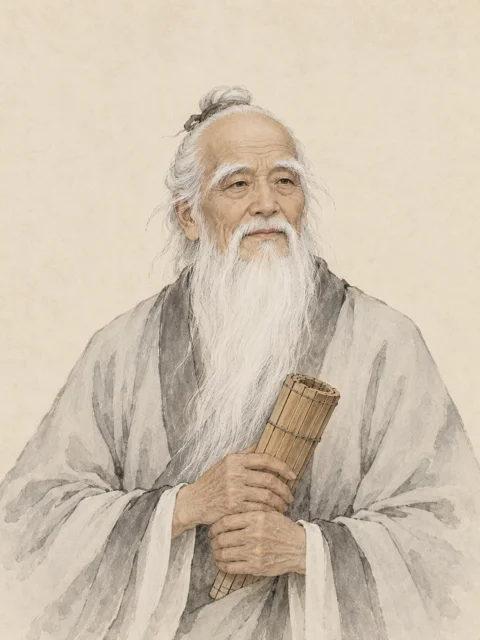
 AI 创作示意
GUANFU / en
道德经
AI 创作示意第五十五章
版本按章对照,不代表逐句校勘对应。
中文原文 / 原典;电子文本 Ching-yi Chen
观复随文注释 · 10 条
含「德」之厚,比于赤子初生婴儿。毒蟲不螫shì,毒虫刺伤,猛獸不據攫取、扑抓,攫鳥凶猛的鸟;攫读 jué不搏。骨弱筋柔而握固。未知牝牡雌雄;读 pìn mǔ之合而朘作婴儿生殖器自然勃起;朘读 zuī,精之至也。終日號而不嗄声音嘶哑;读 shà,和之至也。知和曰「常」,知常曰「明」。益生曰「祥」强求增益生命为不祥;祥有灾祥之解。心使氣用欲念强驱气息曰「強」。物壯則老,謂之不道,不道早已过早衰亡;已,止。
观复随文注释 · AI 辅助独立整理,待持续人工校订。释义以本章语境为依据;存在异说或底本疑讹的地方另作提示。原文及版本来源保留如下。
公有领域;Project Gutenberg 电子书使用条款随来源全文保留 · 查看原始版本
欢迎引用本站资源,分享道家与道教文化。引用时请注明出处“观复”,并附上所引用内容的原始页面链接,方便读者查阅。
观复白话释义(AI 辅助) / 观复 · AI 辅助独立整理
【白话释义|AI 辅助独立整理,未经人工学术审定】
德蕴含深厚的人,可以比作初生婴儿。毒虫不伤他,猛兽不扑他,猛禽不抓他;骨骼柔弱、筋腱柔软,手却握得牢。还不知道男女交合,生殖器却能勃起,这是生命精气充足的表现;整天啼哭而声音不哑,这是和气充足的表现。认识这种和,叫常;认识常,叫明。过分增益生命的欲求,会成为不祥之兆;以心意强使气运行,是逞强。事物过度强盛就转向衰老,这叫不合于道;不合于道,就会早早终止。〔校订:“祥”有吉祥、妖祥等训释,本稿取警戒义;婴儿不受伤害是原文理想化譬喻。〕
观复白话释义:AI 辅助依据古文独立编写,已进行文本覆盖核对,未经人工学术审定;原典来源及电子底本署名、许可见对应中文版本。 · 查看原始版本
James Legge 英译 / James Legge(理雅各)
1. He who has in himself abundantly the attributes (of the Tao) is like an infant. Poisonous insects will not sting him; fierce beasts will not seize him; birds of prey will not strike him.
2. (The infant's) bones are weak and its sinews soft, but yet its grasp is firm. It knows not yet the union of male and female, and yet its virile member may be excited;—showing the perfection of its physical essence. All day long it will cry without its throat becoming hoarse;—showing the harmony (in its constitution).
3.
To him by whom this harmony is known, (The secret of) the unchanging (Tao) is shown, And in the knowledge wisdom finds its throne. All life-increasing arts to evil turn; Where the mind makes the vital breath to burn, (False) is the strength, (and o'er it we should mourn.)
4. When things have become strong, they (then) become old, which may be said to be contrary to the Tao. Whatever is contrary to the Tao soon ends.
公有领域;Project Gutenberg 电子书使用条款随来源全文保留 · 查看原始版本
我的书签(此浏览器)
还没有书签。