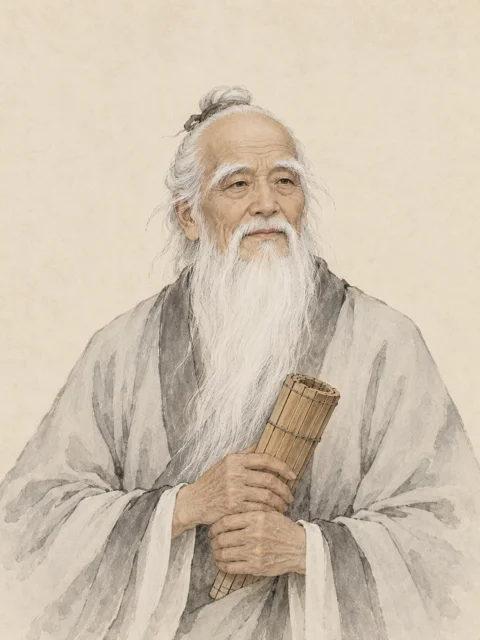
 AI 创作示意
GUANFU / zh-Hant
道德经
AI 创作示意第二十七章
版本按章对照,不代表逐句校勘对应。
中文原文 / 原典;电子文本 Ching-yi Chen
观复随文注释 · 8 条
善行,無轍跡车轮留下的痕迹,善言,無瑕謫毛病、可指摘之处﹔善數,不用籌策计算所用的筹码﹔善閉,無關楗门闩;楗读 jiàn而不可開,善結,無繩約绳索捆束而不可解。是以聖人常善救人,故無棄人﹔常善救物,故無棄物。是謂襲明内藏而善用明智;有异解。故善人者,不善人之師﹔不善人者,善人之資借鉴、资助。不貴其師,不愛其資,雖智大迷,是謂要妙精要微妙之处。
观复随文注释 · AI 辅助独立整理,待持续人工校订。释义以本章语境为依据;存在异说或底本疑讹的地方另作提示。原文及版本来源保留如下。
公有领域;Project Gutenberg 电子书使用条款随来源全文保留 · 查看原始版本
欢迎引用本站资源,分享道家与道教文化。引用时请注明出处“观复”,并附上所引用内容的原始页面链接,方便读者查阅。
观复白话释义(AI 辅助) / 观复 · AI 辅助独立整理
【白话释义|AI 辅助独立整理,未经人工学术审定】
善于行走,不留可寻的车辙足迹;善于言说,没有可指摘的漏洞;善于计算,不依赖筹码;善于关闭,不用门闩却无法打开;善于系结,不用绳索却无法解开。因此圣人总善于救助、成全人,没有必须被丢弃的人;总善于善用、保全物,没有必须被抛弃的物。这叫承袭内在的明。善人是不善人的老师,不善人也是善人借以学习的材料。不珍重老师,不爱惜这些借鉴,纵然自以为聪明,也是大迷惑。这就是精要幽微之处。
观复白话释义:AI 辅助依据古文独立编写,已进行文本覆盖核对,未经人工学术审定;原典来源及电子底本署名、许可见对应中文版本。 · 查看原始版本
James Legge 英译 / James Legge(理雅各)
1. The skilful traveller leaves no traces of his wheels or footsteps; the skilful speaker says nothing that can be found fault with or blamed; the skilful reckoner uses no tallies; the skilful closer needs no bolts or bars, while to open what he has shut will be impossible; the skilful binder uses no strings or knots, while to unloose what he has bound will be impossible. In the same way the sage is always skilful at saving men, and so he does not cast away any man; he is always skilful at saving things, and so he does not cast away anything. This is called 'Hiding the light of his procedure.'
2. Therefore the man of skill is a master (to be looked up to) by him who has not the skill; and he who has not the skill is the helper of (the reputation of) him who has the skill. If the one did not honour his master, and the other did not rejoice in his helper, an (observer), though intelligent, might greatly err about them. This is called 'The utmost degree of mystery.'
公有领域;Project Gutenberg 电子书使用条款随来源全文保留 · 查看原始版本
我的书签(此浏览器)
还没有书签。