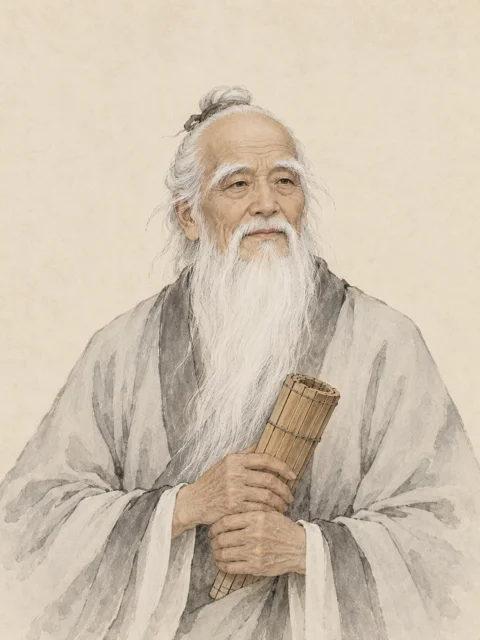
 AI 创作示意
GUANFU / zh-Hans
道德经
AI 创作示意第六十四章 · 白话释义
版本按章对照,不代表逐句校勘对应。
中文原文 / 原典;电子文本 Ching-yi Chen
观复随文注释 · 9 条
其安易持,其未兆未显出征兆易謀,其脆易泮pàn,分散、消解,其微易散,為之于未有,治之于未亂。合抱之木,生于毫末极细微的萌芽﹔九層之臺,起于累土一筐筐积起的土;累有异文﹔千里之行,始于足下。為者拜之拜疑为败的录入讹字,原样保留待校,執者失之,是以聖人無為,故無敗,無執,故無師师疑为失的录入讹字,原样保留待校。民之從事,常于几成接近成功而敗之﹔慎終如始,則無敗事。是以聖人欲不欲以不贪欲为所欲,不貴難得之貨﹔學不學,復眾人之所過补救众人的过失。以輔萬物之自然,而不敢為。
观复随文注释 · AI 辅助独立整理,待持续人工校订。释义以本章语境为依据;存在异说或底本疑讹的地方另作提示。原文及版本来源保留如下。
公有领域;Project Gutenberg 电子书使用条款随来源全文保留 · 查看原始版本
欢迎引用本站资源,分享道家与道教文化。引用时请注明出处“观复”,并附上所引用内容的原始页面链接,方便读者查阅。
观复白话释义(AI 辅助) / 观复 · AI 辅助独立整理
【白话释义|AI 辅助独立整理,未经人工学术审定】
局面安定时容易维持,事情尚未显出征兆时容易谋划;脆弱的容易分解,细微的容易疏散。要在问题尚未出现时处置,在混乱尚未形成时治理。合抱的大树从细小幼芽长起,九层高台从一筐筐土筑起,千里行程从脚下第一步开始。强作会败坏事情,执持会失去事情;圣人不妄为,所以不败坏,不执持,所以不丢失。人做事常在快成功时失败;对结束像对开始一样谨慎,就不会坏事。圣人所求,是不陷于贪求;不珍贵难得的财货,学习人们不肯学的,纠正众人所犯的过失,辅助万物依其本性发展,而不敢强加造作。〔底本校记:本站原文“为者拜之”“故无师”疑分别为“败之”“失”的讹字,本稿按句义暂释,未修改原文,须人工核对。〕
观复白话释义:AI 辅助依据古文独立编写,已进行文本覆盖核对,未经人工学术审定;原典来源及电子底本署名、许可见对应中文版本。 · 查看原始版本
James Legge 英译 / James Legge(理雅各)
1. That which is at rest is easily kept hold of; before a thing has given indications of its presence, it is easy to take measures against it; that which is brittle is easily broken; that which is very small is easily dispersed. Action should be taken before a thing has made its appearance; order should be secured before disorder has begun.
2. The tree which fills the arms grew from the tiniest sprout; the tower of nine storeys rose from a (small) heap of earth; the journey of a thousand li commenced with a single step.
3. He who acts (with an ulterior purpose) does harm; he who takes hold of a thing (in the same way) loses his hold. The sage does not act (so), and therefore does no harm; he does not lay hold (so), and therefore does not lose his hold. (But) people in their conduct of affairs are constantly ruining them when they are on the eve of success. If they were careful at the end, as (they should be) at the beginning, they would not so ruin them.
4. Therefore the sage desires what (other men) do not desire, and does not prize things difficult to get; he learns what (other men) do not learn, and turns back to what the multitude of men have passed by. Thus he helps the natural development of all things, and does not dare to act (with an ulterior purpose of his own).
公有领域;Project Gutenberg 电子书使用条款随来源全文保留 · 查看原始版本
我的书签(此浏览器)
还没有书签。