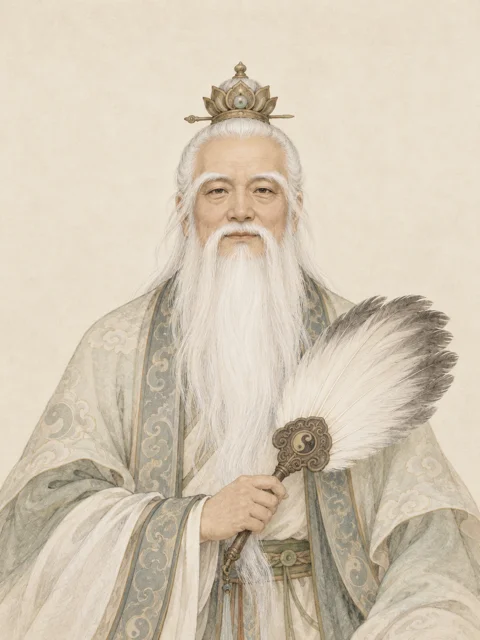
 AI 创作示意
GUANFU / zh-Hans
太上老君说常清静经
AI 创作示意经文 · 白话释义
版本按章对照,不代表逐句校勘对应。
中文原文(含附赞) / 道教原典;维基文库贡献者整理
观复随文注释 · 25 条
老君经中说法者太上老君,道教尊神曰:大道無形,生育天地;大道無情不以私情偏爱,運行日月;大道無名,長養萬物;吾不知其名,強名勉强给它命名曰道。夫道者:有清有濁,有動有靜;天清地濁,天動地靜;男清女濁古代阴阳配属说,非人的高下评判,男動女靜。降本流末从根本流行到万物之末,而生萬物。清者濁之源,動者靜之基。人能常清靜,天地悉皆歸。
夫人神好清精神本好清明,而心擾之;人心好靜,而慾牽之。常能遣其慾排除过度的欲求而心自靜,澄其心使心澄明而神自清。自然六慾由感官等引发的欲求;分类有异说不生,三毒贪、嗔、痴三种烦恼消滅。所以不能者,為心未澄,慾未遣也。能遣之者,內觀向内省察心念於心,心無其心不执着心念为实有;外觀於形,形無其形;遠觀於物,物無其物。三者既悟,唯見於空。觀空亦空连对空的执着也放下,空無所空;所空既無,無無亦無;無無既無,湛然常寂澄明而常安静;寂無所寂,慾豈能生?慾既不生,即是真靜。真常應物以恒常清明之心应接事物,真常得性体会本具的真性;常應常靜,常清靜矣。如此清靜,漸入真道;既入真道,名謂得道,雖名得道,實無所得不把得道当成可占有之物;為化眾生教化众生,名謂得道;能悟之者,可傳聖道。
老君曰:上士能领悟并践行道的人無爭,下士好爭;上德不德德高而不自居有德,下德執德执着于自己有德的名相;執著之者,不名道德。眾生所以不得真道者,為有妄心虚妄纷乱的心念。既有妄心,即驚其神;既驚其神,即著萬物执着于外物;著读 zhuó;既著萬物,即生貪求;既生貪求,即是煩惱;煩惱妄想,憂苦身心;便遭濁辱尘俗污染与困辱,流浪生死,常沉苦海比喻生死烦恼的处境,永失真道。真常之道,悟者自得。得悟道者,常清靜矣。
观复随文注释 · AI 辅助独立整理,待持续人工校订。释义以本章语境为依据;存在异说或底本疑讹的地方另作提示。原文及版本来源保留如下。
原典公有领域;电子文本据维基文库贡献者,按 CC BY-SA 4.0 保留署名及相同方式共享;调整空白与排版。 · 查看原始版本
欢迎引用本站资源,分享道家与道教文化。引用时请注明出处“观复”,并附上所引用内容的原始页面链接,方便读者查阅。
观复白话释义(AI 辅助) / 观复 · AI 辅助独立整理
【白话释义|AI 辅助独立整理,未经人工学术审定】
老君说:大道没有可见的形体,却生养了天地;大道没有人的情感好恶,却使日月运行;大道没有固定的名称,却滋养万物、使它们成长。我不知道它本来的名称,姑且称它为‘道’。
道的展现有清与浊、动与静的分别:天清而地浊,天动而地静。原文又以男性属清、属动,女性属浊、属静来作对应。万物由根本向下展开、流布为各种形态而产生。清是浊的源头,动是静的基础。人若能够常守清静,天地的道理便都能在自身得到会通。
人的精神本来向往清明,却受到纷扰的心念搅动;人的心本来向往安静,却被欲望牵引。能够不断放下欲望,心便自然安静;澄清心念,精神便自然清明。这样,各种欲念不再兴起,贪、嗔、痴这三种毒害也就消退。人之所以做不到,是因为心还没有澄清,欲望还没有放下。
能够放下这些执著的人,向内观察心念,不再把心执定为一个实有不变的东西;向外观察身体,不再执著身体的形相;进而观察外物,也不再执著外物。领悟这三层意思,所见便只是空。再观察这种‘空’,连空也不可执著:没有一个固定的对象需要被空掉。既然没有这种对象,连‘什么也没有’的观念也要放下;放下这种观念,便澄澈而常寂。连寂静也没有可执著之处,欲望还从哪里生起呢?欲望不再生起,才是真正的静。
以真实恒常的状态回应事物,也就在其中体认本性;不断回应外界而内心常静,便是恒常的清静。如此守清静,逐渐进入真正的道。进入真道,被称为‘得道’,但实际上并不是占有了某种东西。为了引导、教化众生,才设立‘得道’这个名称。能够领悟的人,便可以传承圣道。
老君说:上等的学道人不争,下等的学道人喜欢争夺;德行高的人不把自己的德当作可夸示的功绩,德行低的人却执著于自己有德。执著不放,不能称为真正的道德。
众生不能体认真道,是因为有虚妄的心念。有了妄心,就扰动精神;精神受到扰动,就执著于种种外物;执著外物,就生出贪求;贪求既起,烦恼便随之而来。烦恼与妄想使身心陷于忧苦,遭受浊乱与屈辱,在生死中流转,长久沉入苦海,失去与真道相契的状态。真实恒常的道,领悟的人能够亲自体会;悟道的人,便能常保清静。
【校订说明】‘男清女浊’等是经文的传统阴阳配属,译文保留其历史表述,不作现代性别价值判断。‘天地悉皆归’、‘真常应物’有不同注解,此处采用修持与体认的解释。‘三毒’按常见释义解为贪、嗔、痴。
观复白话释义:AI 辅助依据古文独立编写,已进行文本覆盖核对,未经人工学术审定;原典来源及电子底本署名、许可见对应中文版本。 · 查看原始版本
James Legge 英译(正文) / James Legge(理雅各),1891
Ch. 1. 1. Lâo the Master said, The Great Tâo has no bodily form, but It produced and nourishes heaven and earth. The Great Tâo has no passions, but It causes the sun and moon to revolve as they do.
The Great Tâo has no name, but It effects the growth and maintenance of all things.
I do not know its name, but I make an effort, and call It the Tâo.
2. Now, the Tâo (shows itself in two forms); the Pure and the Turbid, and has (the two conditions of) Motion and Rest. Heaven is pure and earth is turbid; heaven moves and earth is at rest. The masculine is pure and the feminine is turbid; the masculine moves and the feminine is still. The radical (Purity) descended, and the (turbid) issue flowed abroad; and thus all things were produced.
The pure is the source of the turbid, and motion is the foundation of rest.
If man could always be pure and still, heaven and earth would both revert (to non-existence).
3. Now the spirit of man loves Purity, but his mind disturbs it. The mind of man loves stillness, but his desires draw it away. If he could always send his desires away, his mind would of itself become still. Let his mind be made clean, and his spirit will of itself become pure.
As a matter of course the six desires will not arise, and the three poisons will be taken away and disappear.
4. The reason why men are not able to attain to this, is because their minds have not been cleansed, and their desires have not been sent away.
If one is able to send the desires away, when he then looks in at his mind, it is no longer his; when he looks out at his body, it is no longer his; and when he looks farther off at external things, they are things which he has nothing to do with.
When he understands these three things, there will appear to him only vacancy. This contemplation of vacancy will awaken the idea of vacuity. Without such vacuity there is no vacancy.
The idea of vacuous space having vanished, that of nothingness itself also disappears; and when the idea of nothingness has disappeared, there ensues serenely the condition of constant stillness.
5. In that condition of rest independently of place how can any desire arise? And when no desire any longer arises, there is the True stillness and rest.
That True (stillness) becomes (a) constant quality, and responds to external things (without error); yea, that True and Constant quality holds possession of the nature.
In such constant response and constant stillness there is the constant Purity and Rest.
He who has this absolute Purity enters gradually into the (inspiration of the) True Tâo. And having entered thereinto, he is styled Possessor of the Tâo.
Although he is styled Possessor of the Tâo, in reality he does not think that he has become possessed of anything. It is as accomplishing the transformation of all living things, that he is styled Possessor of the Tâo.
He who is able to understand this may transmit to others the Sacred Tâo.
2. 1. Lâo the Master said, Scholars of the highest class do not strive (for anything); those of the lowest class are fond of striving. Those who possess in the highest degree the attributes (of the Tâo) do not show them; those who possess them in a low degree hold them fast (and display them). Those who so hold them fast and display them are not styled (Possessors of) the Tâo and Its attributes.
2. The reason why all men do not obtain the True Tâo is because their minds are perverted. Their minds being perverted, their spirits become perturbed. Their minds being perturbed, they are attracted towards external things. Being attracted towards external things, they begin to seek for them greedily. This greedy quest leads to perplexities and annoyances; and these again result in disordered thoughts, which cause anxiety and trouble to both body and mind. The parties then meet with foul disgraces, flow wildly on through the phases of life and death, are liable constantly to sink in the sea of bitterness, and for ever lose the True Tâo.
3. The True and Abiding Tâo! They who understand it naturally obtain it. And they who come to understand. the Tâo abide in Purity and Stillness.
James Legge 1891 年历史译本,公有领域;据 Sacred Books of the East 第40卷 Appendix I;正文保留,脚注请查来源。 · 查看原始版本
我的书签(此浏览器)
还没有书签。