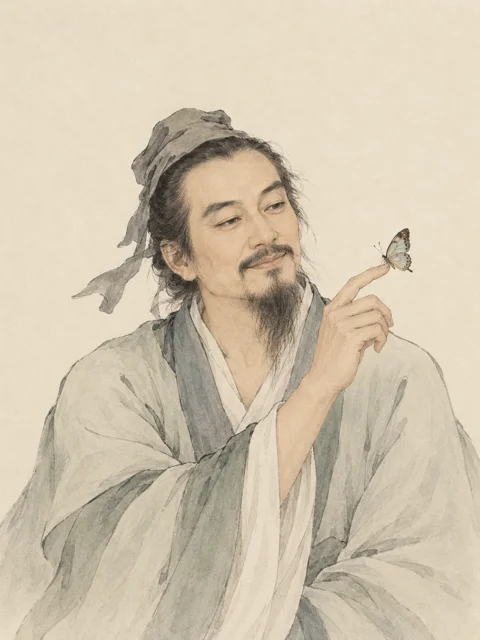
 AI 创作示意
GUANFU / en
庄子
AI 创作示意Chapter 30
版本按章对照,不代表逐句校勘对应。
中文原文(全三十三篇) / 庄子原典;维基文库贡献者整理
观复随文注释 · 33 条
昔趙文王篇中赵国君主称谓,历史对应有争议喜劒同剑,劒士夾門而客居住在宫门两旁作门客,三千餘人,日夜相擊於前,死傷者歲百餘人,好之无一作「不」厭。如是三年,國衰,諸侯謀之。太子悝太子的名字;读 kuī患之,募左右曰:「孰能說王之意劝说改变君王的心意;说读 shuì,止劒士者,賜之千金。」左右曰:「莊子當能。」太子乃使人以千金奉莊子。莊子弗受,與使者俱往見太子,曰:「太子何以教周,賜周千金?」太子曰:「聞夫子明聖,謹奉千金以幣從赠礼给随从的谦辞。(者)夫子弗受,悝尚何敢言?」莊子曰:「聞太子所欲用周者,欲絕王之喜好也。使臣上說大王而逆王意,下不當太子,則身刑而死,周尚安所事金乎?使臣上說大王,下當太子,趙國何求而不得也?」太子曰:「然。吾王所見,唯劒士也。」莊子曰:「諾。周善爲劒。」太子曰:「然吾王所見劒士,皆蓬頭,突鬢,垂冠,曼胡之纓粗陋无饰的帽带,短後之衣后襟较短、便于搏斗的衣服,瞋目瞪大眼睛;瞋读 chēn而語難说挑衅、逞强的话,王乃悅之。今夫子必儒服而見王,事必大逆。」莊子曰:「請治劒服。」治劒服三日,乃見太子。太子乃與見王,王脫白刃拔出明亮的剑待之。莊子入殿門不趨不作小步快走的恭敬姿态,見王不拜。王曰:「子欲何以教寡人,使太子先?」曰:「臣聞大王喜劒,故以劒見王。」王曰:「子之劒,何能禁制?」曰:「臣之劒,十步一人,千里不留行。」王大悅之,曰:「天下无敵矣!」莊子曰:「夫爲劒者,示之一作「人」以虛故意露出空当诱敌,開之以利,後之以發后于对手出手,先之以至先于对手击中。願得試之。」王曰:「夫子休就舍,待命令設戲請夫子。」王乃校劒士考较、选拔剑士七日,死傷者六十餘人,得五六人,使奉劒於殿下,乃召莊子。王曰:「今日試使士敦交锋、相击。」(劔)莊子曰:「望之久矣!」王曰:「夫子所御杖所使用的兵器,長短何如?」曰:「臣之所奉皆可。然臣有三劒,唯王所用。請先言而後試。」王曰:「願聞三劒。」曰:「有天子劒,有諸侯劒,有庶人劒。」王曰:「天子之劒何如?」曰:「天子之劒,以燕谿、石城北方地名,此处借作剑锋爲鋒,齊、岱齐地与泰山;岱指泰山爲鍔剑刃;读 è,晉、衛一作「魏」爲脊,周、宋爲鐔剑柄与剑身相接的护手;读 xín,韓、魏爲夾一作「鋏」剑柄;鋏读 jiá,包以四夷古代对四方族群的统称,裹以四時,繞以渤海,帶以常山恒山的旧称,制以五行木火土金水五种运行范畴,(論以刑德,)開以陰陽,持以春夏,行以秋冬。此劒,直之无前,舉之无上,案之无下,運之无旁,上決浮雲,下絕地紀大地的纲维,借指山川疆界。此劒一用,匡諸侯,天下服矣。此天子之劒也。」文王芒然自失,曰:「諸侯之劒何如?」曰:「諸侯之劒,以知勇士爲鋒,以清廉士爲鍔,以賢良士爲脊,以忠聖士爲鐔,以豪桀士爲夾一作「鋏」。此劒,直之亦无前,舉之亦无上,案之亦无下,運之亦无旁,上法圓天以順三光日、月、星,下法方地以順四時,中知一作「和」民意以安四鄉。此劒一用,如雷霆之震也,四封四方疆界之內,无不賓服归顺服从而聽從君命者矣。此諸侯之劒也。」王曰:「庶人之劒何如?」曰:「庶人之劒,蓬頭,突鬢,垂冠,曼胡之纓,短後之衣,瞋目而語難,相擊於前,上斬頸領,下決肝肺。此庶人之劒,无異於鬭雞一作「鷄」,一旦命已絕矣,无所用於國事。今大王有天子之位,而好庶人之劒,臣竊爲大王薄之。」王乃牽而上殿,宰人掌管膳食的人上食,王三環之绕着食案走了三圈。莊子曰:「大王安坐定氣,劒事已畢奏矣。」於是文王不出宮三月,劒士皆服斃自服而死等解释,古注有异说其處也。
观复随文注释 · AI 辅助独立整理,待持续人工校订。释义以本章语境为依据;存在异说或底本疑讹的地方另作提示。原文及版本来源保留如下。
参考: 本站所收原典:杂篇 · 說劍 ↗
原典公有领域;电子文本据维基文库贡献者,按 CC BY-SA 4.0 保留署名及相同方式共享;调整空白与排版。 · 查看原始版本
欢迎引用本站资源,分享道家与道教文化。引用时请注明出处“观复”,并附上所引用内容的原始页面链接,方便读者查阅。
观复白话释义(AI 辅助) / 观复 · AI 辅助独立整理
【观复白话释义|AI 辅助·未经人工学术审定】
从前赵文王喜欢剑术,门庭两旁住着被他奉为宾客的剑士,有三千多人,日夜在他面前相互击刺,每年死伤一百多人,他却喜欢得不知满足。这样过了三年,国家衰弱,诸侯开始谋划对付赵国。太子悝忧虑此事,向左右招募说:“谁能劝转大王的心意,停止剑士比斗,赏他千金。”左右说:“庄子应当能办到。”
太子派人捧着千金去见庄子。庄子不接受,和使者一起来见太子,问:“太子有什么要交代我的,竟赐我千金?”太子说:“听说先生明达通圣,谨献千金,作为奉给随从的礼物。先生不肯接受,我哪里还敢开口?”庄子说:“我听说太子想用我,是想让大王断绝这项爱好。如果我向上游说大王,却违逆了他的心意;向下又不能符合太子的期望,那就可能遭刑而死,金子对我还有什么用?如果上面说服大王,下面又满足太子,在赵国还有什么想要而得不到的?”太子说:“是。不过大王接见的,只有剑士。”庄子说:“好,我善于用剑。”
太子说:“可是大王见的剑士,都蓬着头,鬓发突出,帽子低垂,系着粗大的帽带,穿后襟很短的衣服,瞪着眼睛,用挑战的话说话,大王才喜欢他们。如今先生若一定穿儒者的衣服见王,这事肯定大不顺利。”庄子说:“请准备一套剑士的服装。”准备了三天,庄子穿着剑士服来见太子。太子便领他见王。大王拔出明晃晃的剑等着他。庄子走进殿门,并不小步趋行,见到大王,也不行拜礼。
大王问:“您想拿什么来教我,先让太子引见?”庄子说:“我听说大王喜欢剑,所以拿剑术来拜见。”大王问:“您的剑术,能制伏怎样的对手?”庄子说:“我的剑术,十步之内能击倒一人,行进千里也不受阻拦。”大王非常高兴,说:“天下无敌了!”庄子说:“用剑之法,是把空隙露给对方,用有利的机会引他进攻;出手比他晚,到达却比他早。我愿试一试。”大王说:“先生先到住处休息,等我下令安排比试,再请先生。”
大王让剑士比试选拔了七天,死伤六十多人,选出五六人,叫他们持剑站在殿下,然后召庄子来。大王说:“今天让剑士们与你交手试试。”庄子说:“我盼望很久了!”大王问:“先生惯用的兵器,长短怎样?”庄子说:“我拿什么都可以。不过我有三种剑,任凭大王选用。请先让我讲完,再比试。”大王说:“愿听这三种剑。”庄子说:“有天子之剑,有诸侯之剑,有庶人之剑。”
大王问:“天子之剑怎样?”庄子说:“天子之剑,以燕地的险溪和石城作剑锋,以齐地和泰山作剑刃,以晋、卫作剑脊,以周、宋作剑柄前的护手,以韩、魏作剑柄;四方异族地区包围在外,四季变化包覆其上,渤海环绕,常山横束。用五行的规律节制它,用刑罚与德政衡量它,用阴阳的变化开导它,用春夏的生养持守它,用秋冬的肃杀施行它。这柄剑向前直刺,没有谁挡得住;向上举起,没有什么在它上面;向下按落,没有什么在它下面;向四面运转,没有什么在它范围之外。上能划开浮云,下能截断大地的纲维。这柄剑一经运用,就能匡正诸侯,使天下归服。这就是天子之剑。”
文王茫然,像失去了原有的把握,又问:“诸侯之剑怎样?”庄子说:“诸侯之剑,以有智慧和勇气的人作剑锋,以清廉的人作剑刃,以贤良的人作剑脊,以忠诚明达的人作护手,以豪杰作剑柄。这柄剑向前直刺,同样没有谁挡得住;向上举起,没有什么在它上面;向下按落,没有什么在它下面;向四面运转,没有什么在它范围之外。向上效法圆天,顺应日、月、星的运行;向下效法方地,顺应四季的变化;居中体察民意,使四境人民安定。这柄剑一经运用,就如雷霆震动,国境以内,无不臣服,听从君命。这就是诸侯之剑。”
大王问:“庶人之剑怎样?”庄子说:“庶人之剑,就是蓬头突鬓,帽子低垂,系着粗大的帽带,穿着后襟短的衣服,瞪眼说挑战的话,在面前互相击刺,上砍脖颈,下剖肝肺。这种庶人之剑,和斗鸡没有两样,一旦送掉性命,对国家事务毫无用处。如今大王拥有天子般尊崇的地位,却爱好庶人之剑,我私下认为这有损大王的身份。”
大王于是拉着庄子登殿。主管膳食的人端上饭食,大王却绕着席位走了三圈。庄子说:“大王请安坐,平定心气。关于剑的事情,我已经全都陈奏了。”从此,文王三个月不出宫,那些剑士也都在各自住处伏剑而死。
【篇末疑难注记】“赵文王”按所供原文称谓保留,其历史身份不在本文中另作认定。“曼胡”形容帽带粗大。“鐔”为剑柄前护手,“夹”有“铗”异文,本文按剑柄解。“燕溪、石城”可能含特定地名,正文保留石城,以燕地险溪释燕溪。“刑德”指刑罚与德政。“三光”为日月星。“上决浮云,下绝地纪”为寓言中的夸张比喻。“王三环之”所环对象未明,暂按绕席理解。“服毙”通行可作伏剑自尽解,正文从此读法;它仍是篇中叙事,不另行补写剑士的心理缘由。
观复白话释义:AI 辅助依据古文独立编写,已进行文本覆盖核对,未经人工学术审定;原典来源及电子底本署名、许可见对应中文版本。 · 查看原始版本
Herbert A. Giles 英译(全三十三篇) / Herbert A. Giles(翟理斯),1889
On Swords.
[Spurious.]
Of old, Wên Wang of Chao loved sword-play. Swordsmen thronged his halls, to the number of three thousand and more. Day and night they had bouts before the prince. In the course of a year, a hundred or so would be killed or wounded. Yet the prince was never satisfied.
Within three years, the State had begun to go to rack and ruin, and other princes to form designs upon it. Thereupon the Heir Apparent, Li, became troubled in mind; and said to the officers of his household, "Whosoever shall persuade the prince to do away with these swordsmen, to him I will give a thousand ounces of silver."
To this his officers replied, "Chuang Tzŭ is the man."
Thereupon the Heir Apparent sent messengers to Chuang Tzŭ with a thousand ounces of silver, which he would not accept, but accompanied the messengers back to their master.
"What does your Highness require of me," asked Chuang Tzŭ, "that you should bestow upon me a thousand ounces?"
"I had heard," replied the young prince, "that you were a famous Sage, and I ventured to send this money as a present to your servants.
[Translator’s note] Merely a ceremonious phrase.
But as you would not receive it, what more can I say?"
"I understand," answered Chuang Tzŭ, "that your Highness would have me cure the prince of his peculiar weakness. Now suppose that I do not succeed with the prince, and consequently with your Highness, the punishment of death is what I have to expect. What good would the thousand ounces be to me then?"
"On the other hand, if I succeed with the prince, and consequently with your Highness, the whole State of Chao contains nothing I could not have for the asking."
"You must know, however," said the young prince, "that my father will only receive swordsmen."
"Well," replied Chuang Tzŭ, "I am a good swordsman myself."
"Besides which," added the Heir Apparent, "the swordsmen he is accustomed to see have all dishevelled hair hanging over their temples. They wear slouching caps with coarse tangled tassels, and short-tailed coats. They glare with their eyes and talk in a fierce tone. This is what my father likes. But if you go to him dressed in your ordinary scholar's dress, the result is sure to be disastrous."
"I will accustom myself to the dress," replied Chuang Tzŭ; and after practising for three days, he went again to see the young prince, who accompanied him into his father's presence.
The latter drew a sharp sword and awaited Chuang Tzŭ's approach. But Chuang Tzŭ, when he entered the door of the audience chamber, did not hurry forward, neither did he prostrate himself before the prince.
"What have you to say to me," cried the prince, "that you have obtained your introduction through the Heir Apparent?"
"I have heard," replied Chuang Tzŭ, "that your Highness loves sword-play. Therefore I have come to exhibit my skill."
"What can you do in that line?" asked the prince.
"Were I to meet an opponent," said Chuang Tzŭ, "at every ten paces, I could go on for a thousand li without being stopped."
"Bravo!" cried the prince. "There is not your match in the empire."
"When I fight," continued Chuang Tzŭ, "I make a show of being weak but push a vigorous attack. The last to start, I am the first to arrive. I should like your Highness to make trial of me."
"Rest awhile," replied the prince. "Stay here and await orders. I will arrange a day for you."
Thereupon the prince spent seven days in trying his swordsmen. Some sixty of them were either killed or wounded, but at length he selected five or six and bade them attend in the audience-chamber with their swords. He then summoned Chuang Tzŭ and said, "Now I will see what your swordsmanship is worth."
"I have been longing for this," replied Chuang Tzŭ.
"Does it matter to you," asked the prince, "of what length your weapon may be?"
"Not at all," replied Chuang Tzŭ. "I have three swords, of which I will ask your Highness to choose one. We will then proceed to the trial."
"Which are your three swords?" enquired the prince.
"There is the sword of the Son of Heaven," said Chuang Tzŭ, "the sword of the Princes, and the sword of the People."
"What is the sword of the Son of Heaven?" asked the prince.
"The stone wall of Yen-ch'i is its point," replied Chuang Tzŭ.
[Translator’s note] Some take "stone wall" as the name of a place.
"The mountains of Ch'i are its edge. Chin and Wei are its back. Chou and Sung are its hilt. Han and Wei are its sheath. It is enclosed in the four hordes of barbarians, wrapped in the four seasons, surrounded by the great ocean. It is made of the five elements. It is the arbiter of punishment and reward. It operates under the influence of the Yin and the Yang. In spring and summer it is at rest. In autumn and winter it moves abroad. Push it, it does not advance. Raise it, it does not go up. Lower it, it does not go down. Whirl it around, it does not change position. Above, it cleaves the floating clouds; below, it cuts through the density of earth. One flash of this blade, and the princes of the empire submit. Such is the sword of the Son of Heaven."
At this the prince seemed absorbed in his reflections. Then he enquired, saying, "And what is the sword of the Princes?"
"The Wise and brave," replied Chuang Tzŭ, "are its point. The incorruptible are its edge. The virtuous are its back. The loyal are its hilt. The heroic are its sheath. You may push this sword too, it will not advance. Raise it, it will not go up. Lower it, it will not go down. Whirl it around, it will not change position. Above, it models itself upon the round heaven, in order to keep in harmony with the sun, moon, and stars. Below, it models itself upon the square earth, in order to keep in harmony with the four seasons. It adapts itself to the wishes of the people, in order to diffuse peace on all sides. One flash of this blade is like a roaring clap of thunder. Between the boundaries of the State there is not left one but who yields and obeys the command of his prince. Such is the sword of the Princes."
"And the sword of the People?" enquired the prince.
"The sword of the People," replied Chuang Tzŭ, "has dishevelled hair hanging over its temples. It wears a slouching cap with coarse tangled tassel, and a short-tailed coat. It glares with its eyes and talks in a fierce tone. When it engages in conflict, above, it cuts off head and neck; below, it smites liver and lungs. Such is the sword of the People. It is like a game-cock. One day, its life is cut short, and it is of no more use to the State.
"Now you, great prince, wield sovereign power, and yet you devote yourself to this sword of the People. I am truly ashamed of it."
Thereupon the prince drew Chuang Tzŭ up on to the dais, and the attendants served food, the king three times assisting with his own hand.
[Translator’s note] The prince each time received the dish from the attendants, handed it to Chuang Tzŭ, and then walked round to his own seat again.
"Be seated, great prince," said Chuang Tzŭ, "and compose your mind. I have said all I have to say on swords."
After this the prince did not quit his palace for three months, while the swordsmen, submitting to the new order of things, died in their own homes.
[Translator’s note] One commentator says "killed themselves in their own dwellings." But if so, Chuang Tzŭ's influence was of small practical value as far as the swordsmen were concerned. They might as well have continued their profession of arms.
原著及 Herbert A. Giles 历史译本公有领域;据 Project Gutenberg #59709,完整电子书及使用条款见本站资料来源。 · 查看原始版本
我的书签(此浏览器)
还没有书签。