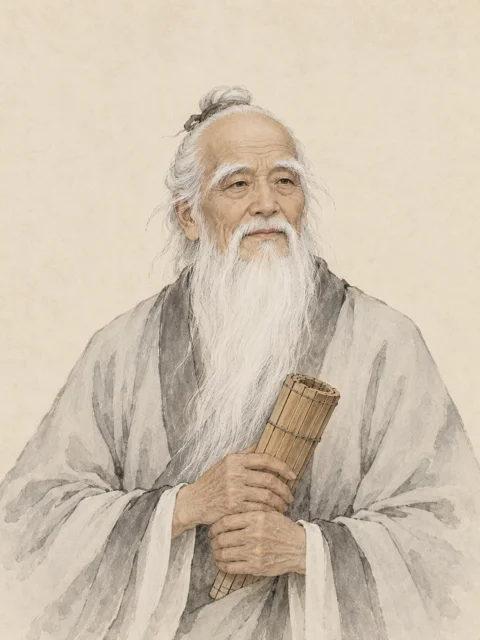
 AI 创作示意
GUANFU / zh-Hant
道德经
AI 创作示意第七十六章
版本按章对照,不代表逐句校勘对应。
中文原文 / 原典;电子文本 Ching-yi Chen
观复随文注释 · 5 条
人之生也柔弱,其死也堅強僵硬,与现代意志坚强不同。草木之生也柔脆,其死也枯槁干枯;槁读 gǎo。故堅強者死之徒归于死亡的一类,柔弱者生之徒。是以兵強則滅恃兵逞强容易覆灭,木強則折树木坚硬易折;此句有异文。強大處下,柔弱處上。
观复随文注释 · AI 辅助独立整理,待持续人工校订。释义以本章语境为依据;存在异说或底本疑讹的地方另作提示。原文及版本来源保留如下。
公有领域;Project Gutenberg 电子书使用条款随来源全文保留 · 查看原始版本
欢迎引用本站资源,分享道家与道教文化。引用时请注明出处“观复”,并附上所引用内容的原始页面链接,方便读者查阅。
观复白话释义(AI 辅助) / 观复 · AI 辅助独立整理
【白话释义|AI 辅助独立整理,未经人工学术审定】
人活着时身体柔软,死后变得僵硬;草木活着时柔嫩,死后干枯。因此僵硬强挺的属于死亡的一类,柔弱有生机的属于生命的一类。军队一味恃强就会覆灭,树木过硬就容易折断。强大僵硬的处在下位,柔弱有生机的处在上位。
观复白话释义:AI 辅助依据古文独立编写,已进行文本覆盖核对,未经人工学术审定;原典来源及电子底本署名、许可见对应中文版本。 · 查看原始版本
James Legge 英译 / James Legge(理雅各)
1. Man at his birth is supple and weak; at his death, firm and strong. (So it is with) all things. Trees and plants, in their early growth, are soft and brittle; at their death, dry and withered.
2. Thus it is that firmness and strength are the concomitants of death; softness and weakness, the concomitants of life.
3. Hence he who (relies on) the strength of his forces does not conquer; and a tree which is strong will fill the out-stretched arms, (and thereby invites the feller.)
4. Therefore the place of what is firm and strong is below, and that of what is soft and weak is above.
公有领域;Project Gutenberg 电子书使用条款随来源全文保留 · 查看原始版本
我的书签(此浏览器)
还没有书签。